
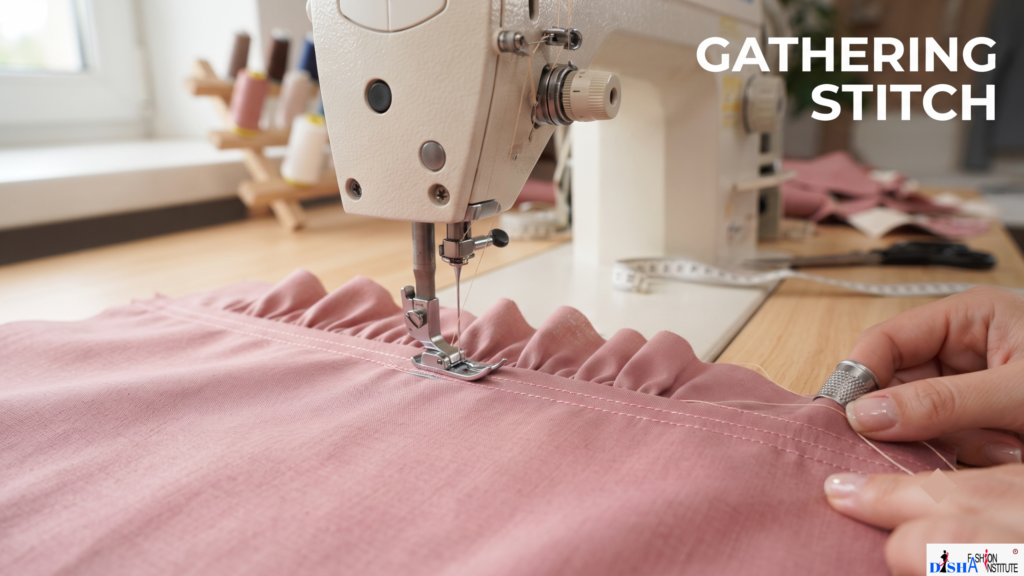
A Gathering Stitch is a long, loose stitch used to gather fabric along a particular edge or section. The stitches create a temporary thread path that can be gently pulled to bring the fabric together.
Gathering can be done by hand, but using a sewing machine with a long straight stitch is a common method. The fabric is then gathered by pulling the thread and sliding the fabric along it.
The amount of gathering can be adjusted according to the design and the size of the area where the gathered fabric needs to be attached.
Why Is Gathering Stitch Used?
The main purpose of a gathering stitch is to create fullness while reducing the overall width or length of a fabric section.
Some common uses include:
- Creating gathered skirts
- Adding fullness to dresses
- Making gathered sleeves
- Creating ruffles
- Shaping certain necklines
- Gathering cuffs
- Fitting fabric into smaller waistbands
- Adding decorative fullness to garments
Gathering is useful for both functional garment construction and decorative design.
How Does Gathering Stitch Work?
The basic process is simple:
Long stitches → pull the thread → fabric gathers → distribute the fullness → sew the final seam
A longer stitch allows the fabric to move along the thread when it is pulled. For machine gathering, two parallel rows of long stitches can provide better control over the fullness.
The thread is gently pulled from the ends, causing the fabric to form small folds. These gathers are then spread evenly before the fabric is permanently sewn to another piece.
How to Sew Gathering Stitch
Follow these simple steps to create neat and even gathers.
Step 1: Prepare the Fabric
Prepare the fabric according to your pattern and mark important points such as the center, notches, or matching positions.
Step 2: Set a Long Stitch
Set your sewing machine to a longer straight stitch than you would normally use for a permanent seam.
Step 3: Sew the First Row
Sew a straight line of long stitches along the area that needs to be gathered. Keep the stitching within the seam allowance.
Step 4: Sew a Second Row
For better control, sew another parallel row close to the first one. Keep the two rows evenly spaced.
Step 5: Leave Long Thread Tails
Do not secure the ends with backstitching. Leave enough thread at both ends so that you can pull the threads later.
Step 6: Pull the Threads
Gently pull the appropriate thread tails and slide the fabric along the thread. The fabric will begin to form gathers.
Avoid pulling too quickly or too hard because the thread can break.
Step 7: Distribute the Gathers
Once you have created the required amount of fullness, spread the gathers evenly across the fabric.
Pay particular attention to matching points and notches so the fullness is distributed correctly.
Step 8: Sew the Final Seam
Place the gathered fabric against the fabric piece it needs to be attached to. Pin it carefully and sew the permanent seam while keeping the gathers evenly distributed.
Where Is Gathering Stitch Used?
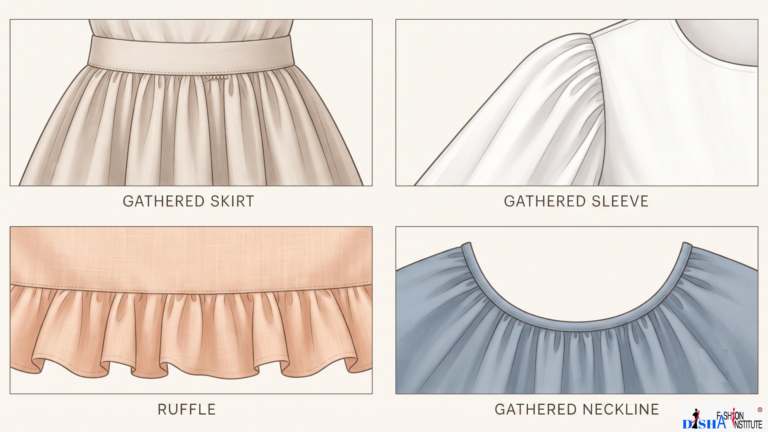
Gathered Skirts
A wide skirt section can be gathered to fit into a smaller waistband. This creates the soft fullness commonly seen in gathered skirts.
Dresses
Gathering can be used around waistlines, necklines, sleeves, and other sections to add shape and fullness.
Sleeves
Gathered sleeves can create a soft, fuller appearance and can be especially useful in puff sleeves and other decorative sleeve designs.
Ruffles
Gathering is one of the basic techniques used to create ruffles. A long strip of fabric can be gathered before being attached to a garment or another fabric section.
Necklines
Some blouse and dress designs use gathering around the neckline to create controlled fullness and a softer shape.
Cuffs and Waistbands
A wider fabric section can be gathered to fit a smaller cuff or waistband, depending on the garment design.
Gathering Stitch vs Ease Stitch
Although both techniques can use longer stitches, they have different purposes.
|
Gathering Stitch |
Ease Stitch |
|
Creates visible fullness and folds |
Controls a small amount of extra fabric |
|
Produces noticeable gathers |
Usually creates a smooth finished seam |
|
Used for skirts, ruffles, dresses, and decorative details |
Commonly used for sleeve caps and curved seams |
|
Fabric is intentionally gathered |
Fabric is only adjusted slightly |
|
Creates functional or decorative fullness |
Mainly helps one fabric edge fit another |
The easiest way to remember the difference is that gathering creates fullness, while ease controls a small amount of existing fullness.
Tips for Even Gathering
Keep these tips in mind when learning gathering stitch sewing:
- Use a longer stitch length.
- Leave long thread tails at both ends.
- Avoid backstitching the gathering rows.
- Pull the thread gently.
- Use two rows when you need better control.
- Distribute the gathers evenly.
- Match pattern notches and important points.
- Avoid pulling the thread too aggressively.
- Keep the fabric flat while distributing the gathers.
- Sew the final seam carefully.
Practising on scrap fabric can help you understand how much thread tension is needed for different fabrics.
Common Gathering Stitch Mistakes
Beginners often make a few common mistakes when learning how to gather fabric.
Using short stitches: Short stitches can make it difficult to pull and adjust the fabric smoothly.
Backstitching the ends: Securing the ends can prevent the gathering threads from moving freely.
Pulling too hard: Excessive force can break the thread.
Uneven gathers: If the fullness is not distributed properly, some areas may look heavily gathered while others remain flat.
Not matching the fabric correctly: Important notches and center points should be matched before sewing the final seam.
Sewing too quickly: Rushing can disturb the carefully arranged gathers.
Taking a little extra time to distribute the fullness before sewing will give you a much cleaner result.
Final Thoughts
Gathering Stitch is a simple but highly useful sewing technique for creating controlled fullness and soft fabric folds. It is widely used for skirts, dresses, sleeves, ruffles, necklines, cuffs, and other garment details.
Learning how to sew gathering stitch gives you greater control over garment shape and design. With longer stitches, gentle thread pulling, and even distribution, you can create neat and attractive gathers without making the fabric look uneven or bulky.
Join Disha Fashion Institute
You can also visit our Homepage or explore our different Course pages to learn more about our programs. If you need any guidance related to courses like Basic Tailoring, Diploma in Tailoring, Fashion Designing, or other fashion-related courses, feel free to contact us. Our team will understand your requirements, skill level, and career goals to guide you toward the most suitable course that matches your learning needs. you can check our YouTube Channel we post our Institute and tutorial over there.