
Everything You Need to Know About Measuring Tools in Sewing
Accuracy is the foundation of every successful sewing project, making the right measuring tools in sewing essential for achieving professional results. Whether you are taking body measurements, drafting patterns, marking fabric, or cutting garment pieces, each measuring tool serves a specific purpose and contributes to better precision. From flexible tape measures and rulers to French curves and seam gauges, selecting the appropriate tool can improve efficiency and reduce costly mistakes. In this guide, you’ll discover the different types of sewing measuring tools, their uses, and how to choose the best ones for your sewing projects.
Table of Contents
List of Measuring Tools in Sewing
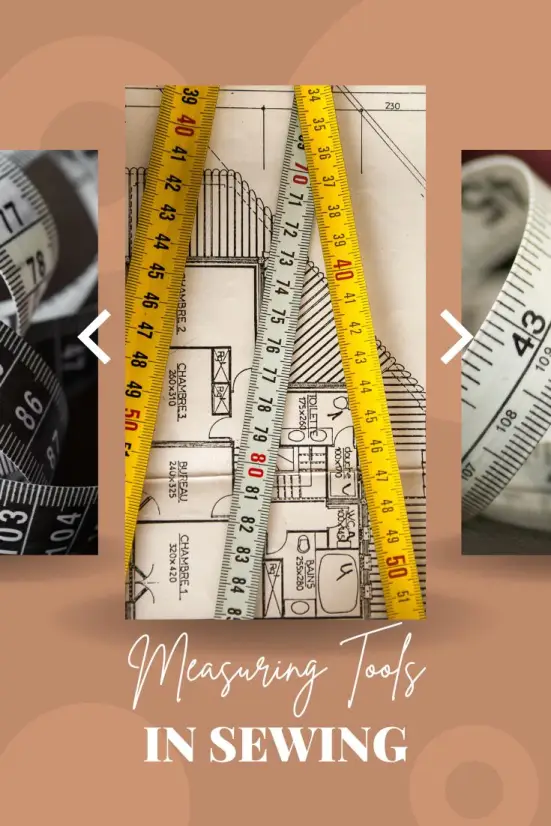
Following are the list of measuring tools in sewing that we will discuss in this blog post.
- Tape Measure
- Extra Long Tape
- Retractable Tape or Flexible Tape
- Flexible Ruler
- Straight Ruler
- Ring Ruler or Ring Scale
- Gridded Ruler or Quilting Ruler
- Clear Ruler
- French Curve
- Sewing Gauge or Seam Gauge
- Yard Stick
- Tailors L square
- Curved Runner
- Cutting Matt
- Arm Curve Ruler
- Hip Curve Ruler
- Leg Curve Ruler
- Arm Hole Curve Ruler
Tape Measure
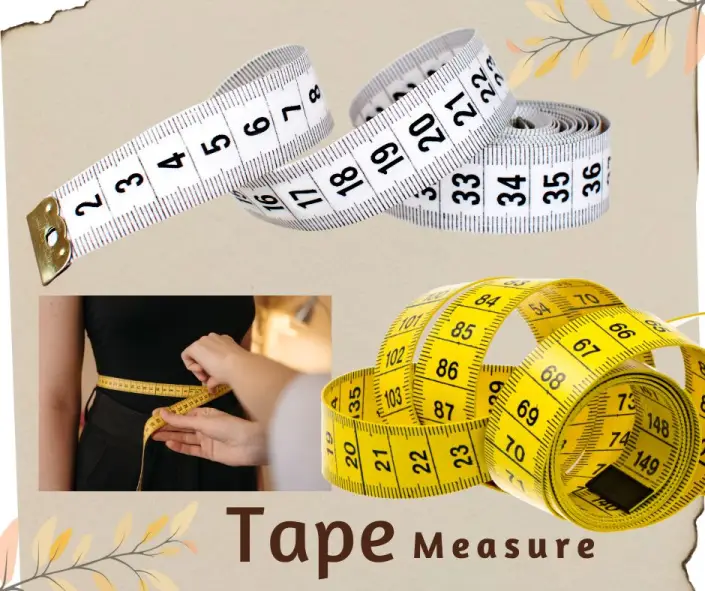
A measuring tape is one of the most important measuring tools in sewing, providing the flexibility and accuracy needed for taking body measurements, measuring fabric, and drafting garment patterns. It is an essential item in every sewing kit and is often the only measuring tool experienced sewists need for creating well-fitted garments. Most measuring tapes are made from durable fiberglass, making them flexible enough to wrap around curves while maintaining reliable measurements. Standard tape measures are typically 60 inches (150 cm) long and feature metric units on one side and imperial units on the other for added convenience. Since measuring tapes can gradually stretch and lose accuracy with frequent use, replacing them periodically is recommended to ensure precise results. Choosing a tape measure with clear, easy-to-read markings and a comfortable width will help improve measurement accuracy and make every sewing project more efficient.
Extra Long Tape
This is usually twice the size of the normal tape measure. It has a length of 300 cm or 10 feet. This is generally required while making soft furnishing. It is also useful to measure the long dresses like a bridal train.
Retractable or Flexible Tape
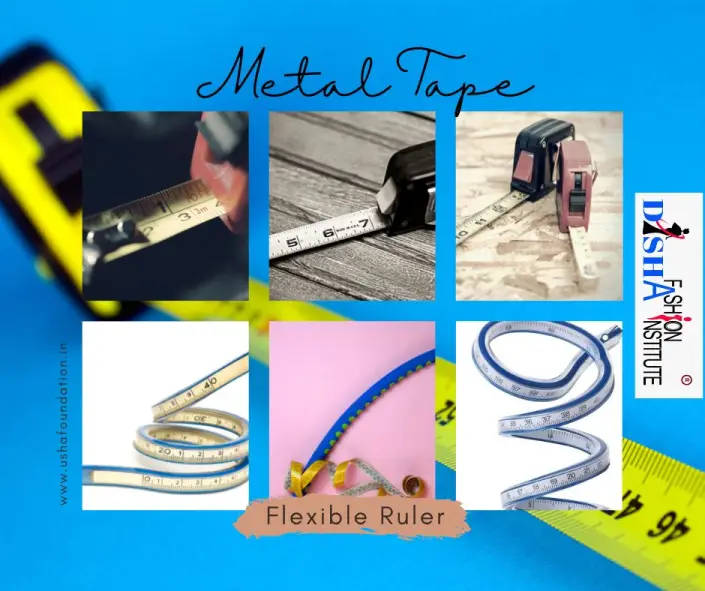
A retractable tape measure is one of the commonly used measuring tools in sewing, although it is more suitable for household, furniture, and construction measurements than for fabric work. It features a coiled measuring tape housed inside a compact case that automatically retracts after use, making it convenient to carry and store. Most retractable tape measures include a metal hook at the end to secure the tape while measuring rigid surfaces. While this design is highly practical for measuring large objects, the metal hook can make it less suitable for sewing because it may interfere with taking accurate fabric and body measurements. For garment construction and pattern drafting, a soft tailor’s measuring tape is generally a better choice due to its flexibility and ease of use.
Flexible Ruler
A flexible curve ruler is one of the most practical measuring tools in sewing, ideal for measuring and tracing curved sections of garments with precision. Its bendable design allows it to adapt to the shape of armholes, necklines, waistlines, hips, and other contoured areas, making it an excellent choice for pattern drafting and garment alterations. Commonly made from durable plastic, this ruler typically features both metric and imperial scales for convenient measuring. Since it can be easily reshaped and holds its position while in use, a flexible curve ruler enables sewists to transfer accurate curved measurements and create well-balanced, professional-looking patterns with ease.
Straight Ruler
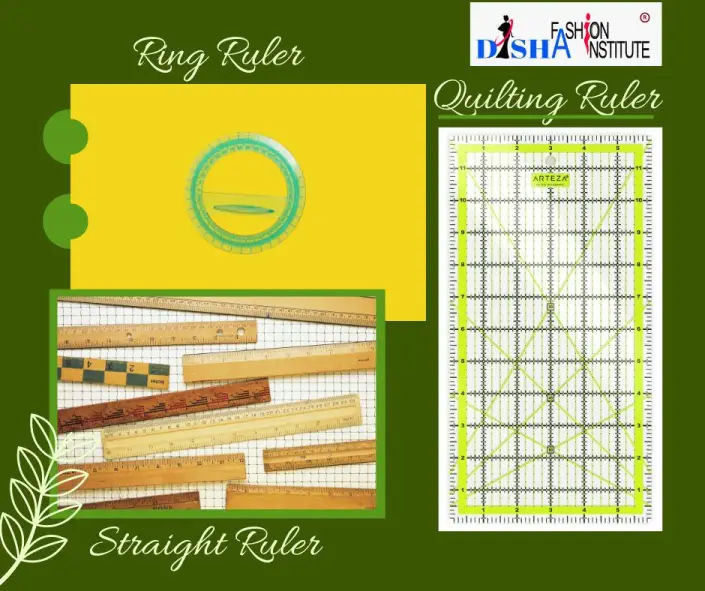
A straight ruler is one of the most essential measuring tools in sewing, providing accurate measurements for pattern drafting, fabric marking, and garment construction. It is ideal for drawing straight lines, measuring seam allowances, marking hems, and aligning pattern pieces before cutting or stitching. Straight rulers are available in various lengths and materials, including plastic, metal, and wood, allowing sewists to choose the option that best suits their projects. Using the right straight ruler helps improve precision, ensures clean and even measurements, and contributes to professional-quality sewing results.
Ring Ruler
A ring ruler is one of the specialized measuring tools in sewing used to measure the circumference of curved or circular fabric pieces without the need to cut or alter them. It is particularly useful when working with large fabric sections, circular patterns, cuffs, necklines, hems, or other rounded garment components that require precise circumference measurements. To use a ring ruler, wrap the fabric smoothly around the ruler and verify the measurement with a measuring tape for greater accuracy. By providing reliable circular measurements, a ring ruler helps improve pattern drafting, fabric planning, and overall precision in sewing projects.
Gridded Ruler or Quilting Ruler
A quilting ruler is one of the specialized measuring tools in sewing designed to provide precise measurements and accurate fabric alignment. Typically made from transparent acrylic or durable plastic, it features clearly marked inch and centimeter scales that make measuring, marking, and cutting fabric easier. Available in various sizes and shapes, quilting rulers are primarily used for quilting projects to create perfectly sized fabric pieces and maintain consistent seam allowances. They are also useful for other sewing tasks, including garment making, patchwork, and home décor projects. Although a quilting ruler is not an essential tool for every sewing project, it is a valuable addition for anyone who regularly works with quilts or requires highly accurate fabric cutting and pattern alignment.
Clear Ruler
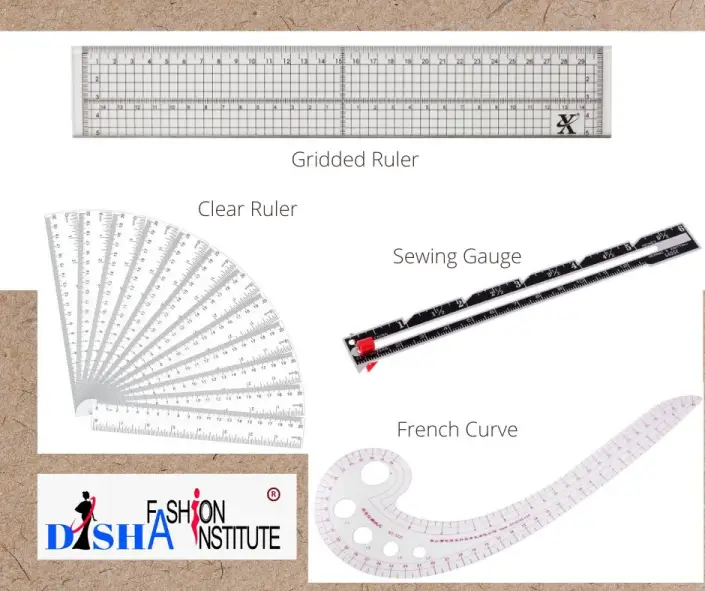
A clear ruler is one of the most practical measuring tools in sewing, offering excellent visibility and precision for a wide range of sewing tasks. Made from transparent plastic, it allows sewists to see the fabric, pattern markings, and grainline underneath while taking measurements or drawing guidelines. This makes it ideal for measuring fabric, marking straight lines and curves, aligning pattern pieces, and assisting with accurate cutting. For the best results, use a fine-tip fabric marker or sharp pencil when marking, and pair the ruler with a straight cutting tool to achieve clean, even edges. Whether you are drafting patterns or preparing fabric for stitching, a clear ruler helps improve accuracy and ensures a professional finish on every sewing project.
French Curve
A French curve is one of the most versatile measuring tools in sewing, widely used for pattern drafting and creating smooth, accurate curved lines. Typically made from transparent plastic or durable metal, it features multiple curve shapes that help sewists draft armholes, necklines, hip curves, collars, and other garment details with precision. Beyond garment construction, a French curve is also useful for fashion illustration, textile design, and technical drawing. Its ergonomic design makes it easy to achieve balanced and professional-looking curves that are difficult to draw freehand. To learn the correct technique for shaping an armhole or neckline with a French curve, watch the video below.
Sewing Gauge or Seam Gauge
A seam gauge is one of the most practical measuring tools in sewing, designed to measure seam allowances, hems, pleats, buttonhole spacing, and other small, precise dimensions. Compact and easy to handle, it typically features a metal or plastic ruler with an adjustable sliding marker that allows sewists to set and repeat exact measurements. Many seam gauges also include a pointed tip for marking fabric accurately. Available in a variety of designs, from basic models to advanced versions with additional features, a seam gauge helps improve consistency and precision in every sewing project. Whether you are a beginner or an experienced sewist, this simple tool is invaluable for achieving neat, accurate, and professional-quality results.
Yard Stick
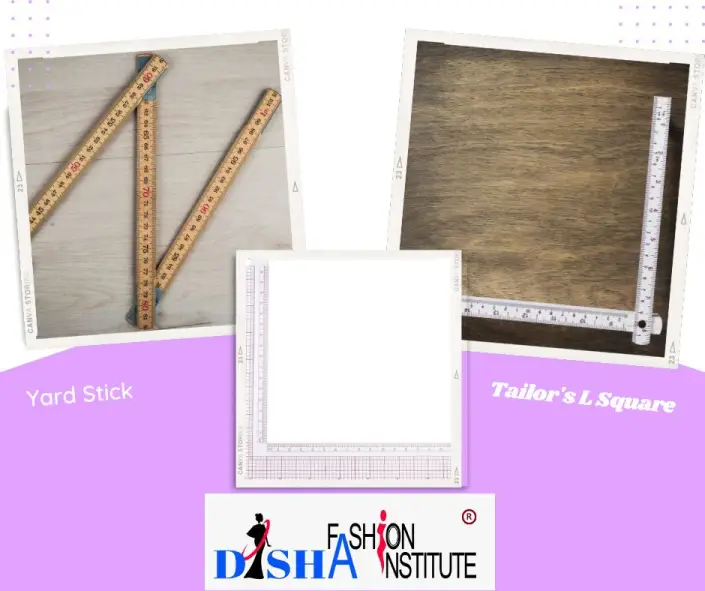
Although a yardstick is commonly associated with construction, carpentry, and other measuring tasks, it is also one of the useful measuring tools in sewing for specific applications. Typically made from wood, metal, or durable plastic, a yardstick features clearly marked measurements in inches or centimeters to ensure accuracy. While it is not used as frequently as measuring tapes, it is especially helpful for measuring the full length of garments such as bridal gowns, dresses, coats, and curtains. A yardstick is also ideal for drawing long, straight lines during pattern drafting, making it a valuable tool for projects that require extended and precise measurements.
Tailor’s L Square
A tailor’s L square is one of the most important measuring tools in sewing, widely used for pattern drafting, fabric marking, and garment construction. Designed with a precise 90-degree angle, it features one long arm and one short arm that help create accurate straight lines, right angles, and balanced measurements. This versatile tool is ideal for drafting necklines, hems, waistlines, and other pattern details while ensuring proper alignment. In addition to fabric, a tailor’s L square can also be used for marking and measuring materials such as paper, leather, and other craft surfaces, making it an essential tool for both beginners and professional sewists.
Curved Runner
A curve runner is one of the specialized measuring tools in sewing designed to measure curved pattern lines quickly and accurately. It is especially useful for checking sleeve heads, armholes, necklines, waistbands, collars, ruffles, binding, piping, and other curved design elements where precise measurements are essential. By comparing adjoining curved edges—such as a sleeve head with its armhole or a neckline with its binding—sewists can ensure proper ease and an accurate fit before cutting or stitching. With regular practice, a curve runner becomes an invaluable tool for improving pattern accuracy and achieving professional-quality results. To see the correct technique in action, watch the video below and learn how to use a curve runner effectively.
Cutting Matt
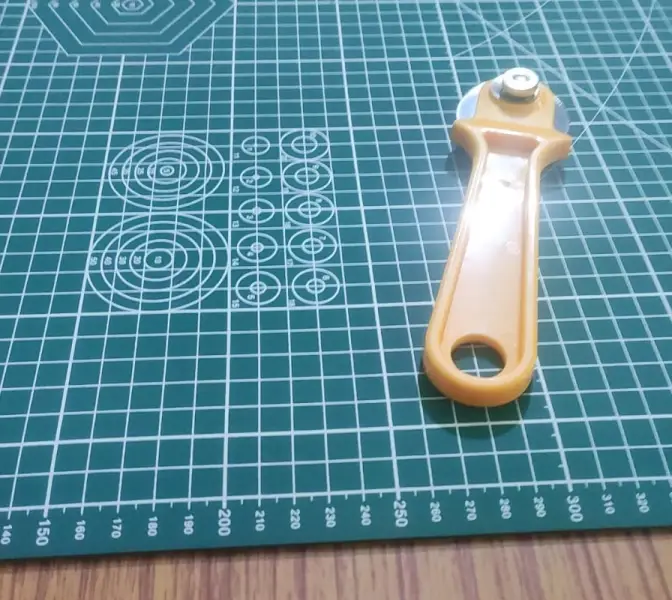
A cutting mat is an essential accessory often used alongside measuring tools in sewing to achieve accurate and clean fabric cutting. Made from durable materials such as plastic or self-healing vinyl, it provides a protective work surface while preventing damage to tables and cutting blades. The printed grid lines help align fabric, paper, and patterns for precise measurements and straight cuts. Widely used by sewists, quilters, and crafters, a quality cutting mat improves accuracy, extends the life of rotary cutters, and creates a more efficient workspace.
Curved Scale or Curved Ruler
Curve rulers are among the most useful measuring tools in sewing, helping create smooth and accurate curved lines for pattern drafting and garment construction. While several types of curve scales are available to suit specific tasks—such as arm curve rulers, armhole curve rulers, hip curve rulers, and leg curve rulers—a French curve is the most versatile option. Its flexible design allows sewists to draft a variety of curves with precision, making it a practical choice for both beginners and experienced professionals.
Conclusion
In conclusion, measuring tools in sewing play a vital role in achieving accurate, consistent, and professional results. From taking body measurements and marking fabric to cutting patterns with precision, the right tools help improve the quality of every sewing project. Choosing durable and reliable measuring equipment minimizes errors, saves time, and makes the sewing process more efficient. With the proper tools and the knowledge to use them effectively, sewists can confidently create well-fitted garments, home décor, and other beautifully crafted sewing projects.
Know Your Sewing Kit
Understanding the different types and uses of sewing materials is an essential first step before beginning a sewing course. Every fabric, thread, and sewing accessory has unique characteristics that influence how it should be handled, stitched, and finished. Learning about these materials in advance, along with measuring tools in sewing, helps build a strong foundation for accurate garment construction and better sewing results. This knowledge not only reduces common mistakes but also makes the entire sewing process more efficient, enjoyable, and rewarding for beginners and experienced learners alike.
Join Disha Fashion Institute
You can also visit our Homepage or explore our different Course pages to learn more about our programs. If you need any guidance related to courses like Basic Tailoring, Diploma in Tailoring, Fashion Designing, or other fashion-related courses, feel free to contact us. Our team will understand your requirements, skill level, and career goals to guide you toward the most suitable course that matches your learning needs. you can check our YouTube Channel we post our Institute and tutorial over there.