

30 Different Types of Sleeves: A Complete Guide
Sleeves play a significant role in defining the style, comfort, and overall appearance of a garment. Understanding the different types of sleeves can help you choose the right design for dresses, tops, blouses, jackets, and other clothing. Each sleeve style offers a unique look, fit, and level of functionality, making it suitable for different occasions, body types, and fashion trends. In this guide, you’ll explore 30 popular sleeve styles, along with their features, advantages, and ideal uses, helping you make informed design and styling decisions.
The different types of sleeves offer endless possibilities for enhancing the style, comfort, and functionality of a garment. Sleeve designs vary in length, including short, elbow-length, three-quarter, and full-length options, and can be crafted from a wide range of fabrics such as cotton, linen, silk, chiffon, or knit materials. From elegant bell sleeves and classic cap sleeves to feminine flutter sleeves and modern puff sleeves, each style creates a distinct silhouette and complements different fashion preferences. Choosing the right sleeve design can significantly influence the overall look, fit, and appeal of any outfit.
With so many options available, it can be hard to know which sleeve is right for you. But don’t worry—we’re here to help. Let us jump into the topic.
Table of Contents
3 Main Categories of Sleeves
There are three main categories of different types of sleeves, based on how they are attached to the bodice of a garment.
Set-in Sleeves
Raglan Sleeves
One-Piece Sleeves
Among these three sleeve categories, set-in sleeves and raglan sleeves are stitched separately to the bodice, while one-piece sleeves are cut as a continuous extension of the bodice from the same piece of fabric. Most sleeve designs used in garment construction are variations of these three basic sleeve categories, making them the foundation of all sleeve styles.
Set-in Sleeve
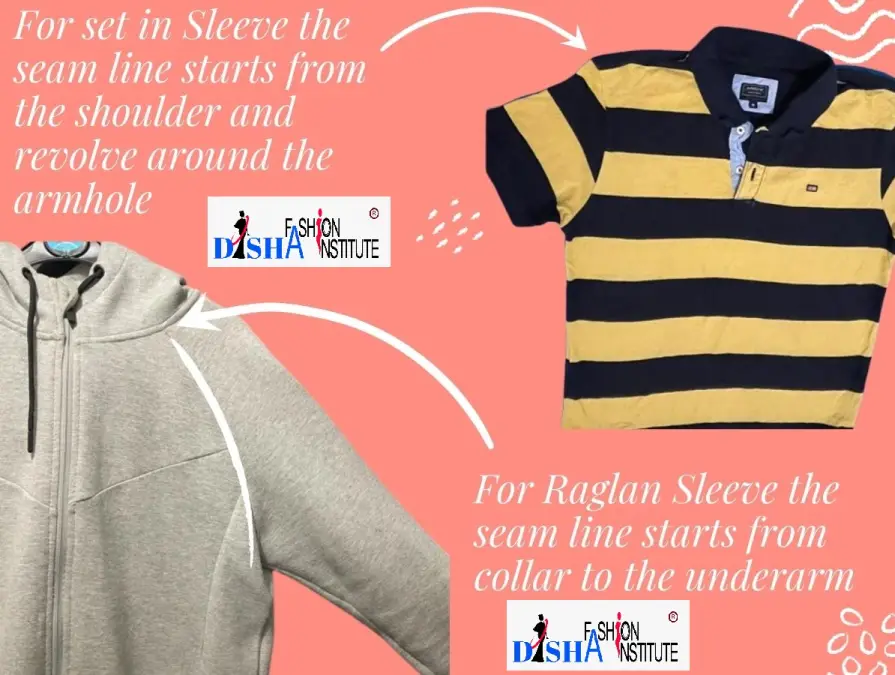
Set-in sleeves are one of the most popular different types of sleeves used in garment construction. In this style, the sleeve and the bodice are cut separately and then stitched together at the armhole. As a result, the seam line begins at the shoulder and follows the curve of the armhole, creating a clean and well-defined shape.
A set-in sleeve is widely used in tailored garments such as shirts, blazers, jackets, coats, and dresses because it provides a structured and fitted appearance. Its smooth construction gives garments a neat, polished finish that enhances their overall look.
Another advantage of a set-in sleeve is its strength and durability. Since the sleeve is securely sewn into the armhole, it is less likely to loosen or lose its shape with regular wear. This makes it an excellent option for garments that are worn frequently or require a long-lasting finish.
If you want your garment to have a classic, refined, and professional appearance, a set-in sleeve is an ideal choice.
Raglan Sleeve
Raglan sleeves are one of the most popular different types of sleeves, featuring a seam that extends from the neckline to the underarm instead of starting at the shoulder. In this style, the sleeve is made as a separate piece and then attached to the bodice, creating a diagonal seam that provides a wider underarm area and a more comfortable fit.
Among the different types of sleeves, raglan sleeves are especially popular in sportswear, sweatshirts, hoodies, and casual garments because they allow greater freedom of movement. Although they are attached to the bodice like set-in sleeves, the key difference is that the seamline begins at the collar and runs down to the underarm, giving the garment a distinctive sporty appearance and enhanced comfort.
One piece Sleeve
This is basically an extension of the bodice, and there exists no seamline between the bodice and the sleeve.
30 Different Styles of Sleeves
All the different styles of sleeves basically fall under the 3 types detailed above.
Regular Sleeve
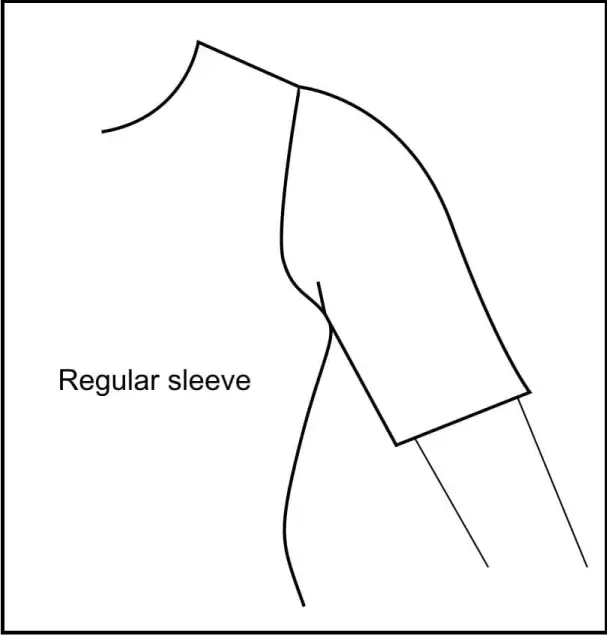
Among the different types of sleeves, regular sleeves are the most common and widely used in everyday garments. They are available in a variety of styles, making them suitable for both casual and formal clothing. Popular neckline pairings include crew neck, V-neck, boat neck, and turtleneck designs, each creating a unique look while maintaining the classic sleeve construction.
Regular sleeves can be made from a wide range of fabrics, including cotton, wool, linen, and synthetic materials. They may also be lined or unlined, depending on the garment’s design, comfort, and intended use. Their simple construction makes them a timeless choice for shirts, dresses, tops, and jackets.
The different types of sleeves in this category can be further classified based on how they are attached to the bodice. The two most common variations are the set-in sleeve, which is stitched separately into the armhole, and the standard shirt sleeve, which is commonly used in shirts and other structured garments.
T-Shirt Sleeve
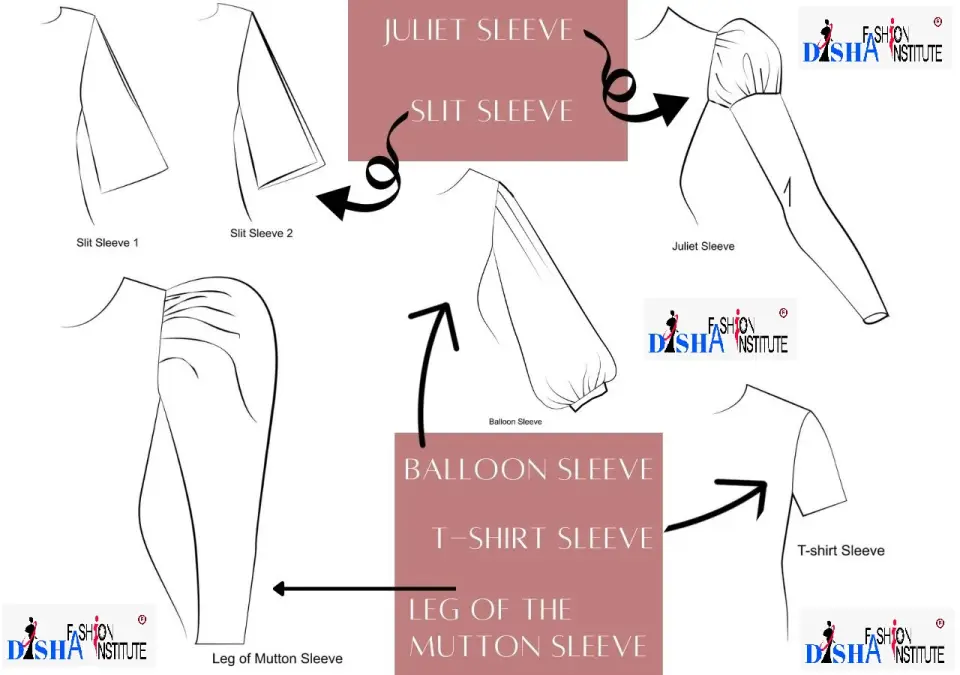
A T-shirt sleeve is one of the most common different types of sleeves and is classified as a set-in sleeve. In this style, the seam runs from the shoulder to the underarm along the armhole, giving the garment a clean and comfortable fit. T-shirt sleeves are typically short and are widely used in casual wear. Their simple design makes them easy to pair with T-shirts, tank tops, button-down shirts, sweaters, and cardigans, making them a versatile choice for everyday outfits.
Leg-of-Mutton Sleeve
The leg-of-mutton sleeve is one of the classic different types of sleeves that became highly popular during the late 19th and early 20th centuries. It features a dramatically full upper sleeve that gradually tapers to a fitted cuff, creating a silhouette that resembles a sheep’s leg, which is how it got its name. This distinctive sleeve style was admired for adding elegance, volume, and a bold fashion statement to dresses, blouses, and formal garments.
Juliet Sleeve
Juliet sleeves are one of the elegant different types of sleeves, closely resembling the leg-of-mutton sleeve but featuring a distinctive two-part construction. The upper portion is full and gathered, creating volume around the shoulder, while the lower portion is fitted and extends along the forearm for a graceful silhouette. Named after Juliet Capulet from Shakespeare’s Romeo and Juliet, this romantic sleeve style is often associated with classic, vintage, and bridal fashion because of its timeless elegance.
Balloon Sleeve
A balloon sleeve is one of the stylish different types of sleeves, featuring a fitted shoulder and upper arm that gradually expands into a rounded, voluminous shape before being gathered at the cuff or lower arm. This balloon-like silhouette adds softness and elegance to a garment, making it a popular choice for dresses, blouses, tops, and contemporary fashion. Balloon sleeves can be styled for both casual and formal outfits, depending on the fabric and overall garment design.
Slit Sleeve
A slit sleeve is one of the elegant different types of sleeves, featuring an opening that runs partially or fully along the length of the sleeve, from the shoulder toward the wrist. This unique design adds movement, style, and a modern touch while allowing the arm to peek through the slit. Slit sleeves are commonly seen in evening gowns, formal dresses, blouses, and fashionable jackets, making them a popular choice for sophisticated and contemporary looks.
Cap Sleeve
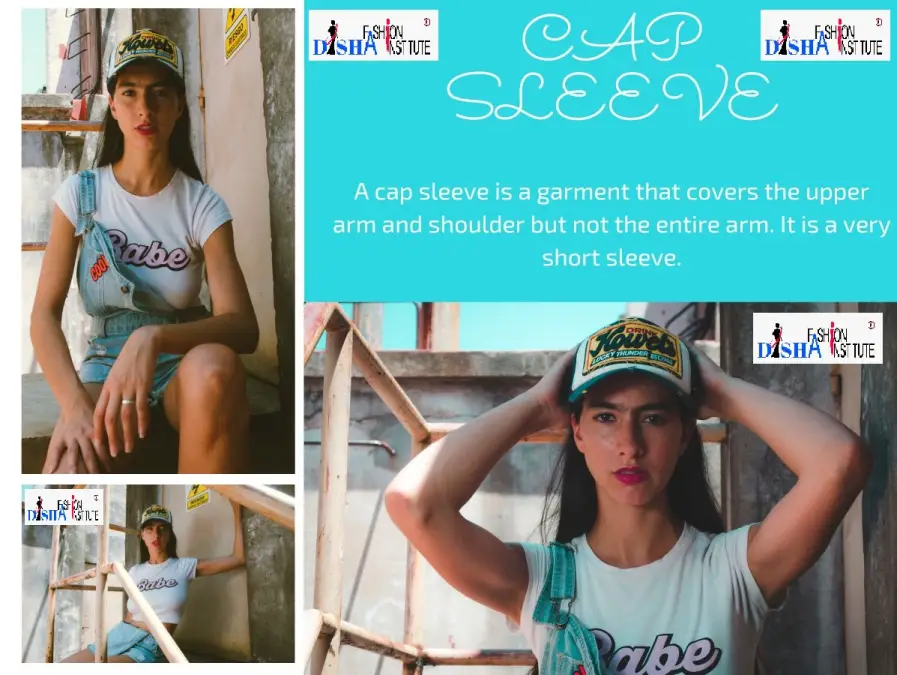
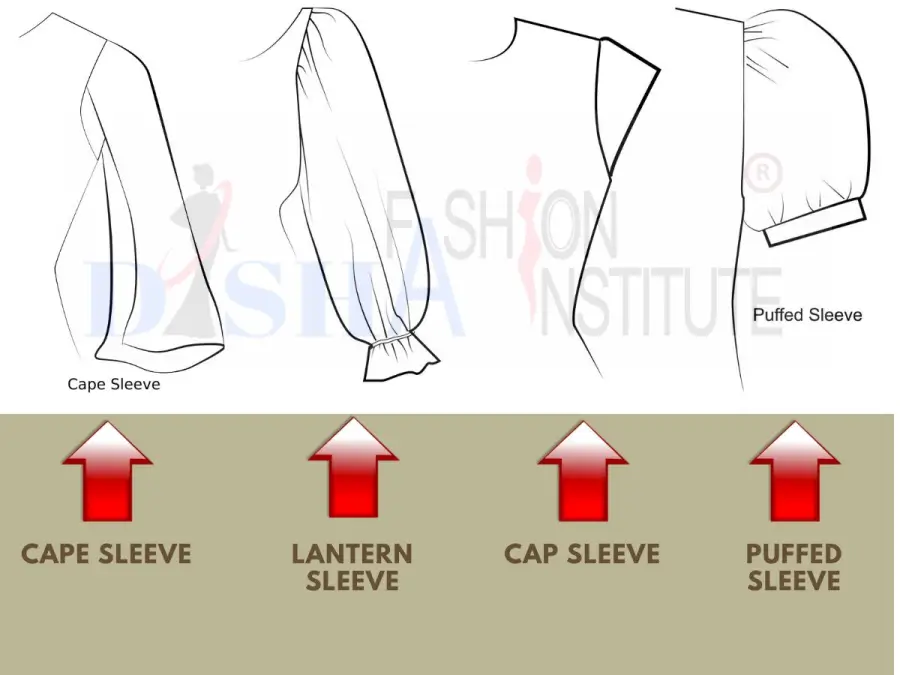
A cap sleeve is one of the most popular different types of sleeves, designed to cover only the shoulder and the upper part of the arm without extending far below the armhole. It is a very short sleeve that is commonly seen on dresses, blouses, and tops. In many designs, a cap sleeve is cut as an extension of the bodice, making it a one-piece sleeve rather than a separately attached sleeve. This sleeve style is especially flattering because it highlights the shoulders and upper arms while providing a neat, feminine, and elegant look without being overly revealing.
Lantern Sleeve
A lantern sleeve is a kind of sleeve that is very wide at the bottom and becomes gradually narrower towards the top. It is one of the most unique and interesting sleeve shapes, and it can definitely make a statement. It is often seen in very elegant and formal dresses.
Cape Sleeve
Cape sleeves basically hang from the shoulder. There is no extension at the underarms.
Cape sleeves are a popular choice for formal wear, as they can give a dress or gown a regal and elegant look. Cape Sleeves are a type of garment worn by both men and women in parts of North India and Pakistan. The sleeves are long and wide and reach down to the ground. They are usually made of a light cotton fabric and are used to protect the wearer from the sun and heat.
Puff Sleeve
Puff sleeves are one of the most fashionable different types of sleeves, known for their soft, gathered fullness that creates a voluminous silhouette. They are typically gathered at the shoulder, the cuff, or both, although the amount of fullness can vary depending on the garment design. This versatile sleeve style is commonly featured in dresses, blouses, tops, and bridal wear, adding a feminine, elegant, and vintage-inspired touch.
Among the different types of sleeves, puff sleeves stand out for their ability to add volume and visual interest without compromising comfort. They can be made from a variety of fabrics, including satin, organza, taffeta, lace, tulle, and cotton, allowing designers to create everything from subtle everyday looks to dramatic formal and bridal gowns. Their timeless appeal makes puff sleeves a favorite choice for both classic and modern fashion.
If you would like to explore different puff sleeve designs in saree blouses you are most welcome to visit our below-mentioned blog post.

Dolman Sleeve or Batwing Sleeve
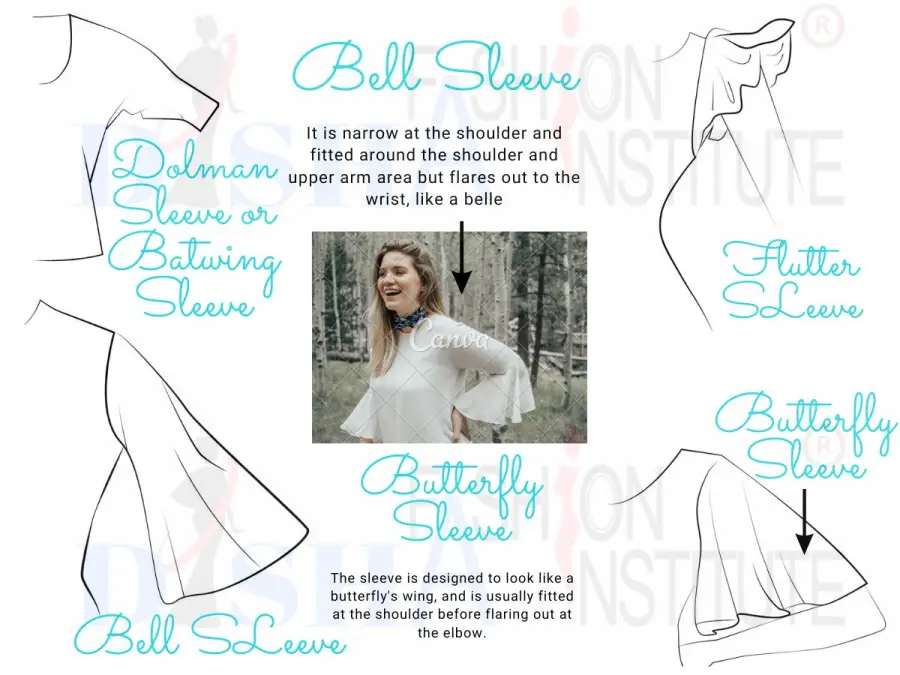
A Dolman sleeve, also known as a batwing sleeve, is one of the most comfortable different types of sleeves, recognized for its wide armhole and gradually tapered fit toward the wrist or cuff. Instead of having a traditional armhole seam, the sleeve is often cut as part of the bodice, creating a relaxed, flowing silhouette. The name “batwing sleeve” comes from its wing-like shape when the arms are extended, making it a popular choice for sweaters, tops, dresses, and loose-fitting garments.
Among the different types of sleeves, Dolman sleeves are valued for their comfort, ease of movement, and stylish appearance. They work best with lightweight fabrics that have a soft drape, such as knit, jersey, rayon, or chiffon. Since the sleeve is integrated into the bodice, it is relatively easy to sew and can be adapted to a variety of casual and elegant garment designs, making it a favorite for both beginners and experienced sewists.
Bell Sleeve
A bell sleeve is a type of sleeve that is wide at the bottom and becomes narrower towards the top. It is named after its resemblance to a bell. Bell sleeves are often found on dresses and tops. They can be made of various materials, such as cotton, linen, or silk.
Butterfly Sleeve
When it comes to fashion, there is nothing quite as eye-catching as a butterfly sleeve. These types of sleeves are often seen on dresses and blouses, and it is characterized by their dramatic, flared shape. If you are looking to make a statement with your clothing, then butterfly sleeves are a great option. The sleeve is designed to look like a butterfly’s wing and is usually fitted at the shoulder before flaring out at the elbow.
Flutter Sleeve
Flutter sleeves are types of sleeves that are attached to the bodice of a garment and hang loose from the shoulder. The flutter sleeve is a very popular style for dresses and blouses.
Bishop Sleeve
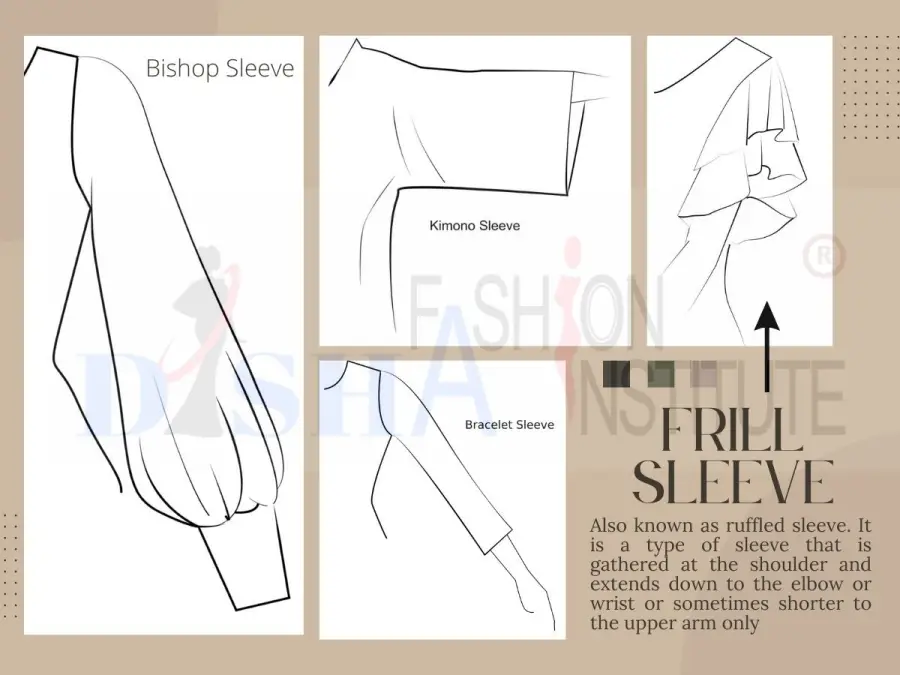
The Bishop sleeve is a type of raglan sleeve named after its inventor, Bishop Robert Stokes. The distinguishing feature of the Bishop sleeve is the use of a single piece of fabric for both the front and back of the sleeve, with a seam running down the outside of the arm. This construction method eliminates the need for a separate sleeve lining and results in a lighter and more comfortable garment.
Kimono Sleeve
A kimono sleeve is a type of sleeve often used in East Asian dress, particularly in Japan, China, and Korea. It is a wide, voluminous sleeve that hangs down from the shoulder to the wrist. The kimono sleeve is also sometimes used in Western dress, particularly in the form of the kimono robe. This is also an example of a one-piece sleeve. The same garment is used with the bodice.
Bracelet Sleeve
A bracelet sleeve is one of the elegant different types of sleeves, designed to end just above the wrist, allowing bracelets, watches, and other accessories to remain visible. This sleeve style typically covers the forearm while leaving the wrist exposed, creating a refined and graceful appearance. Bracelet sleeves are commonly seen on dresses, blouses, jackets, and formal wear, and may be embellished with lace, embroidery, or decorative trims for added elegance.
Among the different types of sleeves, bracelet sleeves are appreciated for their timeless appeal and versatility. Although they have historical roots in traditional fashion, they continue to be a popular choice in modern clothing, offering a sophisticated look that suits both everyday wear and special occasions.
Frill Sleeve
A frill sleeve is a type of sleeve that is gathered at the shoulder and extends down to the elbow or wrist or sometimes shorter to the upper arm only in a series of ruffles. This sleeve style is often seen in dresses and blouses and is a popular choice for special occasions.
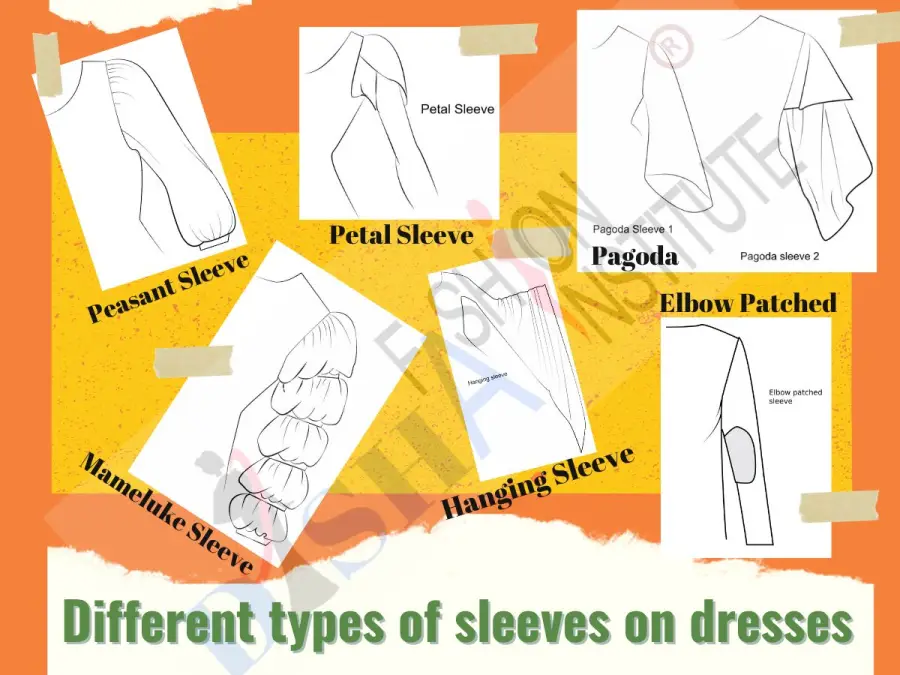
Pagoda Sleeve
A pagoda sleeve is a type of sleeve used in East Asian clothing, typically featuring multiple layers of fabric that taper down to the wrist. The style is often found in traditional Chinese garments, such as the cheongsam, as well as in Japanese kimonos and Korean hanboks. The pagoda sleeve is named after the tiered roofs of East Asian temples, which it is said to resemble.
Peasant Sleeve
A pagoda sleeve is a type of sleeve used in East Asian clothing, typically featuring multiple layers of fabric that taper down to the wrist. The style is often found in traditional Chinese garments, such as the cheongsam, as well as in Japanese kimonos and Korean hanboks. The pagoda sleeve is named after the tiered roofs of East Asian temples, which it is said to resemble.
Petal Sleeve
A petal sleeve is a type of sleeve that is fitted at the shoulder and then flows out into a series of petals. It is a very flattering sleeve style for many different body types.
Mameluke Sleeve
A Mameluke sleeve is one of the distinctive different types of sleeves, inspired by the traditional garments of the Mamluk Sultanate. It is recognized for its dramatic silhouette, featuring a series of gathered and puffed sections from the shoulder to the wrist that create a bell-like appearance. Traditionally made from lightweight fabrics such as silk, these sleeves were often enhanced with embroidery or decorative embellishments to create an elegant and luxurious look.
Among the different types of sleeves, the Mameluke sleeve stands out for its rich historical background and ornate design. It gained popularity in Europe during the 13th and 14th centuries after being introduced by Crusaders returning from the Middle East. Although its popularity declined over time, this unique sleeve style has been revived in modern fashion collections, where it continues to add a dramatic and vintage-inspired touch to dresses and couture garments.
Hanging Sleeve
A hanging sleeve is a type of garment that is often worn by men. It is a long sleeve that hangs down past the wrist. The sleeve can be made of different materials, such as cloth or leather. The hanging sleeve is usually worn with a shirt that has a collar.
Elbow Patched Sleeve
An elbow-patched sleeve is one of the stylish different types of sleeves, featuring a fabric patch sewn onto the elbow area of the sleeve. This design is most commonly seen on sweaters, blazers, jackets, and knitwear, where the patch adds both character and durability. The patch is often made from a contrasting material, such as suede, leather, or textured fabric, creating a distinctive and fashionable look.
Among the different types of sleeves, elbow-patched sleeves are valued for both their style and practicality. Besides enhancing the garment’s appearance, the patch helps reinforce an area that experiences frequent wear and can also be used to repair or cover worn fabric. Whether chosen for its classic aesthetic or added durability, an elbow-patched sleeve remains a timeless design feature in modern fashion.
Off-shoulder Sleeve
An off-shoulder sleeve is one of the most fashionable different types of sleeves, designed to expose the shoulders by positioning the neckline below the shoulder line. This style is commonly featured on dresses, tops, and blouses, making it a popular choice for summer outfits and special occasions. In the classic design, a horizontal neckline extends across the front of the garment, leaving both shoulders uncovered for an elegant and feminine look.
Among the different types of sleeves, the off-shoulder style is most often associated with the two-sided off-shoulder design, where both shoulders are exposed. However, one-shoulder variations are also widely loved for their modern and stylish appeal. To learn how to create this elegant sleeve style, watch the step-by-step video below on cutting and sewing an off-shoulder sleeve dress.
Cold-shoulder Sleeve
A cold shoulder sleeve is a garment that has been designed to expose the shoulder area. The name cold shoulder sleeve is derived from the fact that the garment leaves the shoulder area exposed to the cold. The cold shoulder sleeve has been used in many different garments, including dresses, shirts, and even sweaters. The cold shoulder sleeve is a popular choice for many people because it is a stylish and unique way to show off the shoulders.
Draped Sleeve
A draped sleeve is a type of sleeve that is attached to the bodice at the shoulder and hangs down over the arm. It is usually made of a light, flowing fabric and is often found in dresses and tops.
Fleece Sleeve
Fleece sleeves are designed to provide warmth and insulation. They’re often made from synthetic materials like polyester or acrylic, which trap heat and help the wearer stay warm. Many fleece sleeves also have a zippered closure at the cuff, which can be used to seal in warmth.
Smocked Sleeve
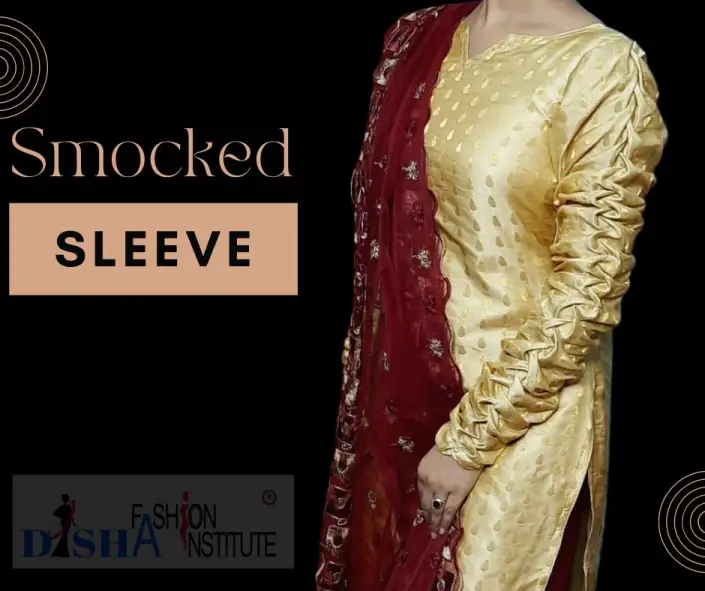
As the name suggests, if fabric manipulation smocking designs are made on the sleeve, it can be called a smocked sleeve. There are two types of Fabric Smocking. Regular fabric smocking is nothing but fabric gathered with decorative embroidery stitches. There is another type of smocking called Canadian smocking, which is much different than regular smocking. Refer to the following blog post to learn about fabric manipulation smocking and its methods in detail Fabric Manipulation Smocking
Origami Sleeve
Origami sleeves are one of the most creative different types of sleeves, inspired by the traditional Japanese art of paper folding. These sleeves are defined by carefully crafted folds, pleats, and geometric shapes that create a structured yet elegant appearance. Their unique design adds depth, dimension, and a modern artistic touch to garments, making them a popular choice for dresses, blouses, and evening wear.
Among the different types of sleeves, origami sleeves stand out for their architectural style and eye-catching details. They combine fashion with craftsmanship, transforming simple garments into statement pieces. To learn more about their design, styling, and construction, read our detailed blog post on Origami Sleeves.
Final Thoughts
The different types of sleeves can completely transform the style, fit, and overall look of a garment. In this guide, we explored 30 popular sleeve styles, along with their features and ideal uses, to help you choose the right design for your sewing projects. If you’re passionate about sewing, want to create beautiful garments at home, or plan to start your own sewing business, exploring a basic-to-advanced sewing course syllabus is a great way to build your skills and confidence.
Tailoring Certificate Courses
Other Tailoring Certificate Course
| Course | Duration | Option 1: One-Time | Option 2: Installments | Option 3: Monthly | Exam Fee |
|---|---|---|---|---|---|
|
6 Months |
5500/- |
– |
1000/- |
1500/- |
|
|
1 Year |
11000/- |
1st Ins 6000/- |
1000/- |
2500/- |
|
|
4 Months |
5500/- |
1st Ins – 3000/- 2nd Ins – 3000/- |
1500/- |
1500/- |
|
|
9 Months |
11000/- |
1st Ins – 5000/- 2nd Ins – 6700/- |
1300/- |
1500/- |
|
|
4 Months |
5500/- |
1st Ins – 3000/- 2nd Ins – 3000/- |
1500/- |
1500/- |
|
|
4 Months |
5500/- |
1st Ins – 3000/- 2nd Ins – 3000/- |
1500/- |
1500/- |
|
|
4 Months |
5500/- |
1st Ins – 3000/- 2nd Ins – 3000/- |
1500/- |
1500/- |
|
|
4 Months |
3500/- |
– |
1000/- |
1500/- |
|
|
4 Months |
5500/- |
1st Ins – 3000/- 2nd Ins – 3000/- |
1500/- |
1500/- |
|
|
2 Months |
3500/- |
– |
2000/- |
1500/- |
|
|
6 Months |
8000/- |
1st Ins – 4500/- 2nd Ins – 4500/- |
1500/- |
1500/- |
|
|
1 Year |
19000/- |
1st Ins – 5000/- |
1st Sem – 1500/- |
2500/- |