
Materials Needed for Aari Work
The things we need to do Aari work are
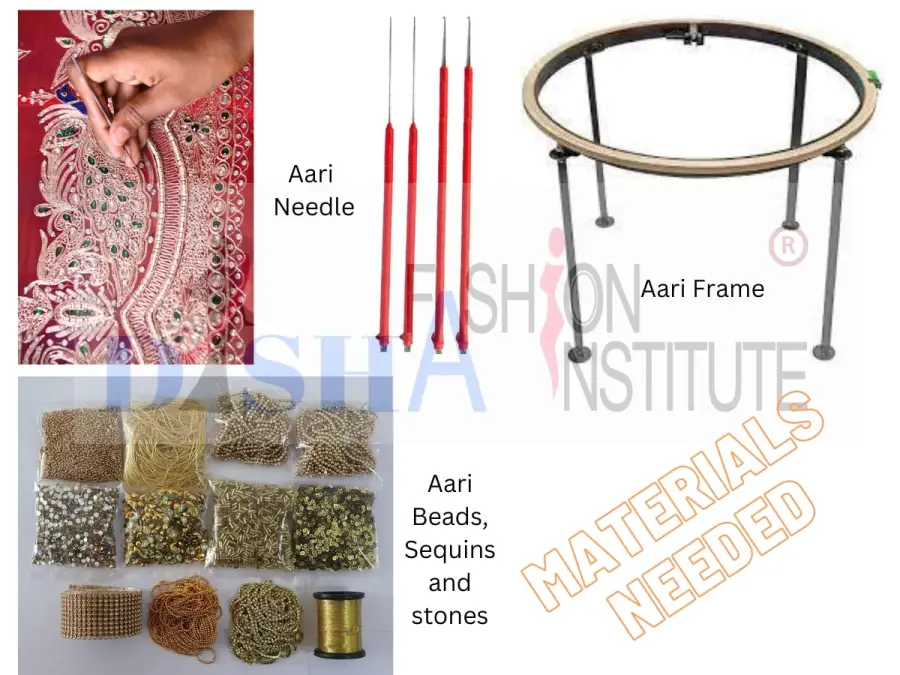
- Aari embroidery wooden hoop
- Aari needle
- Thread cutter
- Cotton, silk, zari thread
- Multi colour sequins, pearls, beads
- Bullion, French, embroidery wires
Aari Work Needle Size for Beginners
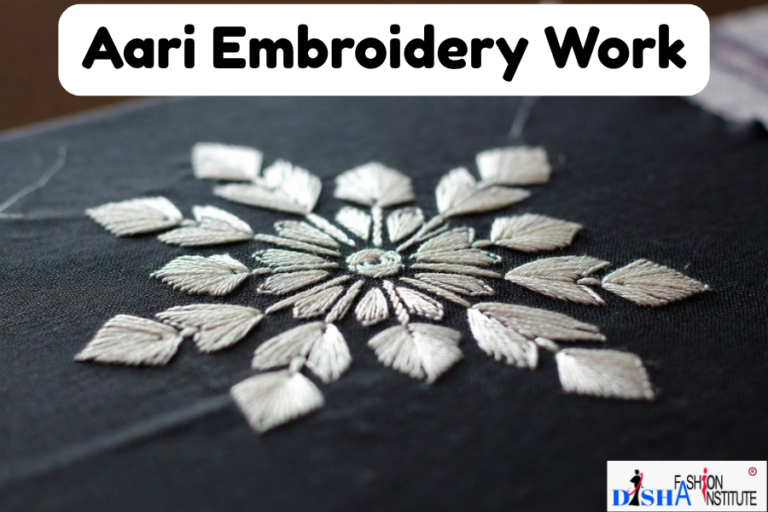
Aari embroidery work is a traditional hand embroidery technique created using a special hooked needle and thread to produce fine, continuous chain stitches on fabric. It is widely admired for its intricate patterns and is commonly used to embellish blouses, sarees, lehengas, dresses, and other decorative textiles.
When learning Aari embroidery, selecting the correct needle size is essential for achieving neat and professional results. The right needle makes stitching smoother, reduces hand fatigue, and helps prevent damage to both the fabric and the needle.
For beginners, a size 5 or size 6 Aari needle is generally recommended. These sizes are easy to handle and are suitable for creating delicate floral motifs, borders, and detailed embroidery without a high risk of breaking the needle.
Once you become comfortable with the basic needle and stitching technique, you can explore a variety of Aari embroidery patterns and decorative stitches. With regular practice and the right tools, you can master Aari embroidery work and create elegant, handcrafted designs that add beauty and sophistication to any garment.
Aari Work Procedure
A step by step video tutorials to do Aari work for beginners
First, the fabric is stretched over a wooden frame, which has four stands to keep the frame straight, just like a table, so that the artist can do work with relaxation. Next, using thread and the aari needle, artisans embellish the cloth with cotton, silk, and zari threads, using sequins, beads, pearls, rhinestones, etc. Usually, before embroidery, the design is traced to the fabric.
The History Behind the Aari Work
Aari work traces back to the 12th century, the Mughal era, when fascinating floral motifs and traditional motifs were used. During that era, these embroidery works were done for royal and elite-class people. So, it is one of the costliest embroidery types in India. Places in India like Rajasthan, Lucknow, Uttar Pradesh, and Delhi are known to have practised Aari embroidery until now.
The Basics of Aari Work
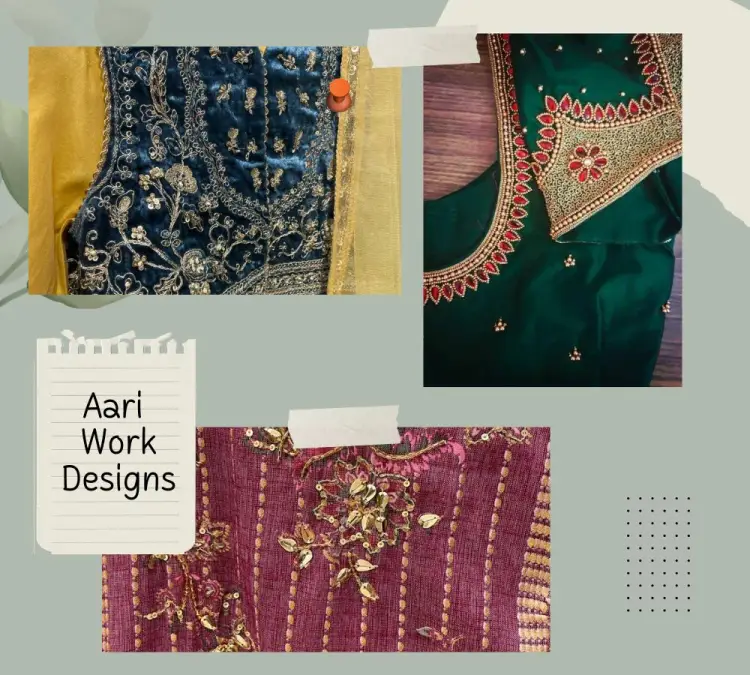
Aari embroidery work is admired for its luxurious appearance, combining zari, silk threads, semi-precious stones, beads, sequins, and other embellishments to create rich and elegant designs. Using a special hooked needle, artisans form continuous chain stitches that produce intricate patterns with exceptional precision. This embroidery technique can be applied to a wide variety of fabrics, including velvet, cotton, silk, Chanderi, organza, and georgette, making it highly versatile for different garments.
Inspired by nature, Aari embroidery commonly features floral designs, leaves, vines, trees, birds, paisley motifs, mango motifs, and intricate jaal patterns. Its adaptability has made Aari embroidery work a popular choice for both traditional Indian attire, such as sarees, lehengas, and blouses, as well as contemporary fashion, where it adds timeless elegance and handcrafted beauty to modern outfits.
The Application of Aari Work
Aari work is considered one of the most time-consuming and tedious hand needlework. So, today, artisans work on a cloth together as a group, making the work less time-consuming and less costly. In modern days, sarees, lehengas, kurtis, sherwanis, sometimes shirts, and party wear gowns are also seen to have Aari work on them.
Tips for Maintaining Aari Work
As Aari work is costly and very intrinsically delicate, it should be maintained with proper care. Dry cleaning is generally recommended for such fabric, though a gentle hand wash can be done to retain its newness.
Other Topics on Embroidery Work