History of Thread Work in Indian Fashion
Indian fashion’s thread work history is long and varied. It has greatly changed from the Mughal era’s Zardozi to today’s geometric patterns.
Basic Elements of Thread Embroidery
To become skilled at thread embroidery, you must know about threads, needles, and fabrics. You can create stunning designs that showcase your talent with practice and patience.
Modern vs Traditional Approaches
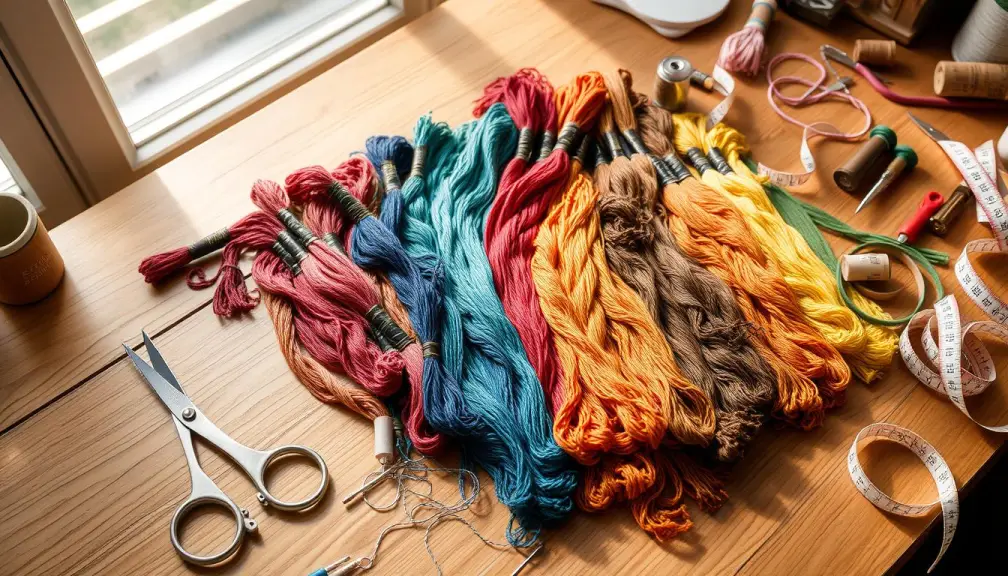 Thread work in Blouse
Choosing the right fabric and tools is key to achieving your desired look. Whether using silk, cotton, or metallic threads, quality tools and materials are essential for success.
Traditional Zardozi Thread Work Techniques
Zardozi techniques have been a key part of Indian and Pakistani fashion for centuries. Designers use gold and silver threads, beads, and sequins to create luxurious designs. Exploring Zardozi reveals the beauty and intricacy of this traditional craft.
The use of metallic threads, such as gold or silver, creates detailed patterns on the fabric, making each piece unique and stunning.
The choice of fabric is important in Zardozi. Silk, cotton, velvet, and satin are often used. These fabrics, combined with gold and silver threads, bead, and sequin embroidery, create stunning pieces. You can add Zardozi embroidery to your designs by sketching, preparing stencils, and framing fabric on wooden frames.
Gold and Silver Thread Applications
Zardozi embroidery often uses metallic threads, like gold or silver, to create patterns on fabric. These threads add elegance and sophistication. You can create simple or complex patterns with gold and silver threads, depending on your design.
Incorporating Beads and Sequins
Bead and sequin embroidery are a big part of Zardozi, adding glamour and luxury. Beads and sequins help create detailed patterns, motifs, and designs, making each piece unique and eye-catching. The mix of beads, sequins, and gold and silver threads creates stunning pieces for special occasions.
Regional Variations in Zardozi
Zardozi has different styles and techniques in various regions. Pakistani Zardozi is known for being more detailed and ornate than Indian Zardozi. Knowing these regional differences helps create authentic and unique designs that show the richness and diversity of Zardozi embroidery.
French Knot and Chain Stitch Patterns
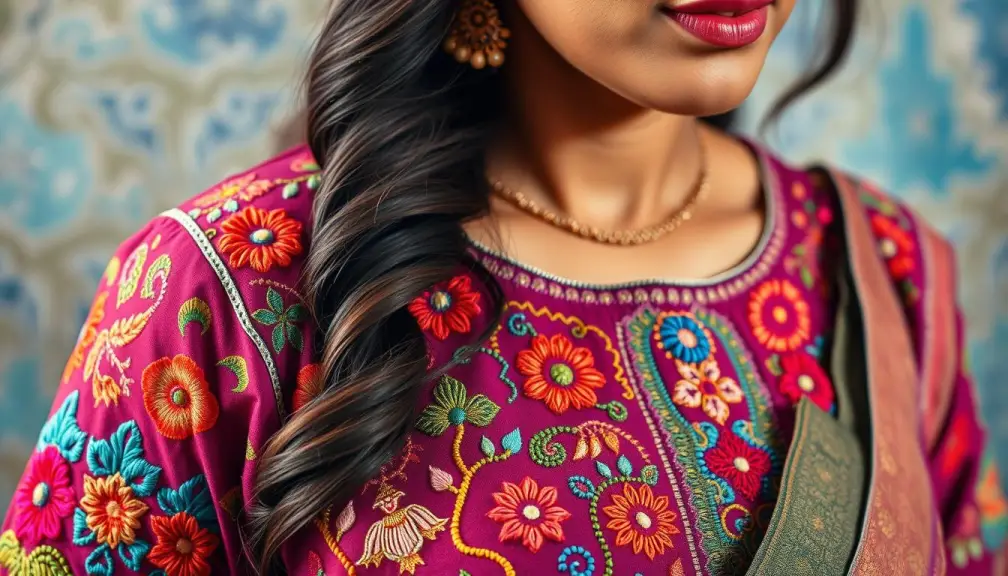
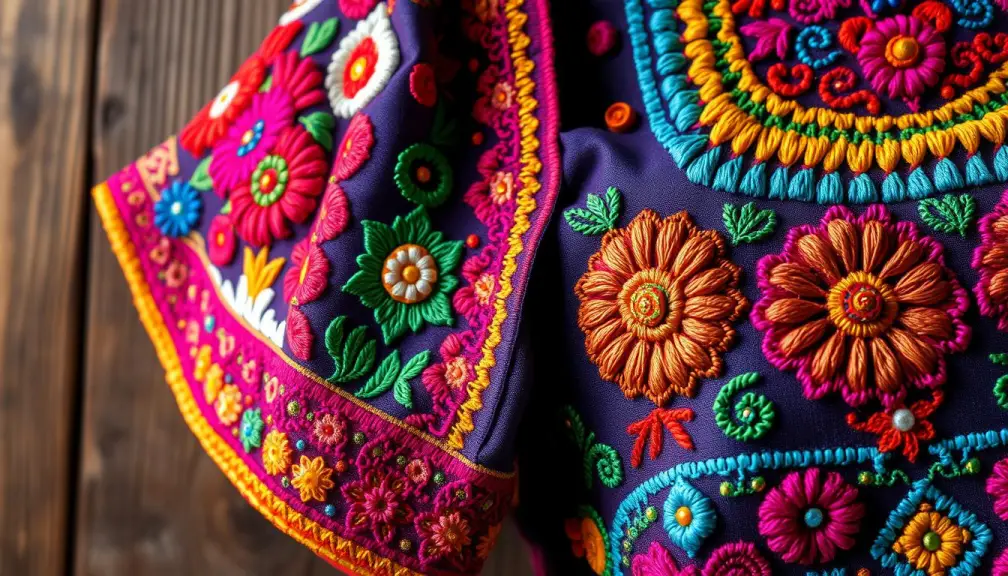
Exploring embroidery patterns, you’ll find that the French Knot and Chain Stitch are two of the most important techniques used in thread work. These stitches add texture, depth, and intricate detailing to embroidery, making blouse designs look more elegant and attractive. They are commonly used in the different types of thread work in blouse designs because of their versatility and decorative appeal.
The French Knot is a classic embroidery stitch that creates small, raised knots, making it ideal for decorating flower centres, leaves, buds, and other delicate motifs. To make a French Knot, hold the thread firmly, wrap it around the needle two or three times, insert the needle close to the starting point, and gently pull the thread through to create a neat knot.
There are three common types of French Knots: Closed, Open, and Long. Closed French Knots are tight and round, giving a clean and polished appearance. Open French Knots are slightly looser, adding softness and natural texture to the design. Long French Knots create elongated stitches that are perfect for fine details, petals, and decorative lines.
Chain Stitch is another essential embroidery technique widely used for outlining floral patterns, borders, vines, and decorative motifs. It forms a continuous series of looped stitches that resemble a chain, creating both beautiful outlines and textured fills. This stitch pairs exceptionally well with French Knots and is frequently seen in the different types of thread work in blouse styles to create detailed and visually appealing embroidery.
Some key features of French Knots and Chain Stitch include:
- French Knots are ideal for filling flower centres, leaves, buds, and tiny decorative details.
- Chain Stitch is perfect for creating outlines, borders, vines, lettering, and textured embroidery.
- Using both stitches together adds depth, dimension, and a handcrafted finish, resulting in elegant and intricate blouse designs.
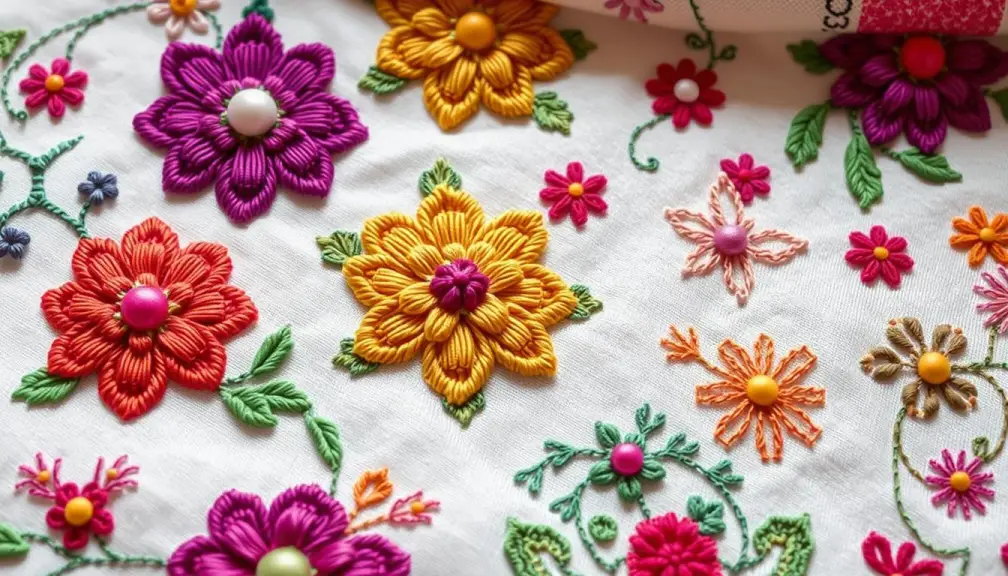
Using French Knots and Chain stitches can make your blouse designs elegant. With practice, you can master these stitches. Then, you’ll create beautiful patterns that show your skill.
Contemporary Thread Work Styles for Modern Blouses
There are many styles for modern blouses with contemporary thread work. This style creates unique designs that make your outfit stand out. Geometric patterns are very popular, adding elegance and sophistication.
With contemporary threadwork, you can try different techniques and materials. Metallic and silk threads can be used to create geometric patterns. These threads create stunning patterns and motifs that add glamour to your blouse.
Popular styles include minimalist designs, geometric patterns, and nature-inspired motifs. These can be made using hand embroidery, machine embroidery, and appliqué. You can also use fabrics like silk, cotton, and chiffon for a unique look.
Minimalist Thread Designs
Minimalist designs are great for adding elegance without too much. They use simple patterns and a few colours. This style is perfect for those who like understated elegance.
Geometric Patterns
Geometric patterns are very popular. They use shapes like triangles, circles, and squares. These patterns add modernity and sophistication, making your blouse perfect for formal events.
Nature-Inspired Motifs
Nature-inspired motifs are also loved. They feature designs like flowers, leaves, and birds. These motifs add whimsy and romance, ideal for casual and semi-formal wear.
Contemporary threadwork offers many options for stylish blouses. You can create a unique look that shows your personality by trying different techniques and materials.
| Thread Work Style | Description |
|---|---|
| Minimalist Thread Designs | Simple patterns and motifs created using a limited colour palette |
| Geometric Patterns | Geometric shapes created using a range of threads and yarns |
| Nature-Inspired Motifs | Patterns and designs inspired by nature, such as flowers and leaves |
Aari Work: A Detailed Overview
Aari work is a centuries-old traditional embroidery technique from India. It decorates fabric with threads such as cotton, silk, and zari.
It also adds sequins, beads, pearls, and rhinestones for detailed designs, making the fabric look beautiful and elegant.
Choosing the right thread is key in Aari work. Cotton threads are strong and easy to use, perfect for beginners. Silk threads are smooth and great for detailed work.
Metallic or zari threads are better for thicker fabrics, like velvet. They add texture and richness to the design.
Here are some tips for Aari work:
- Use high-quality threads for better results.
- Try different threads like cotton, silk, or metallic.
- Add sparkle with beads and sequins.
- Keep the tension even to avoid fabric problems.
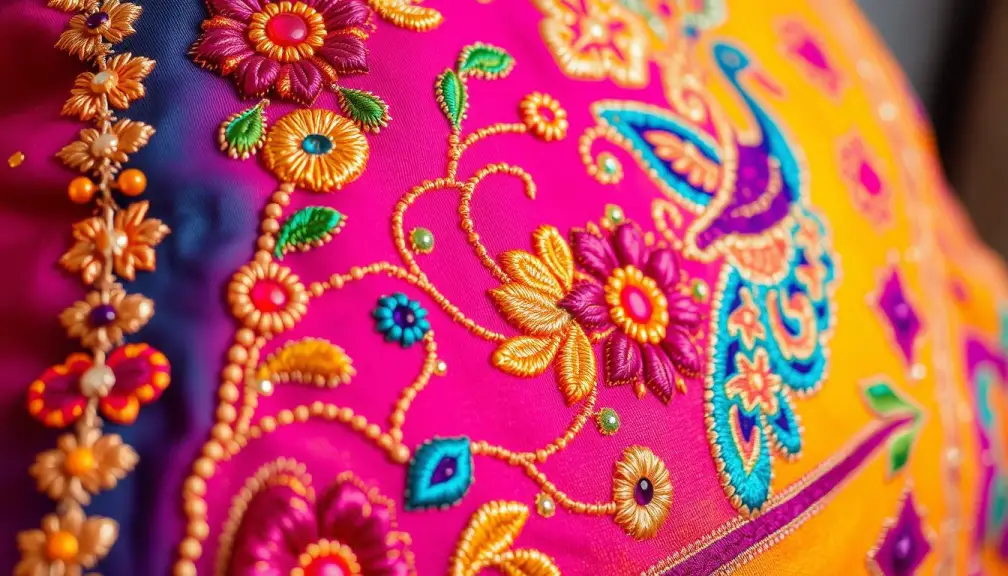
Aari work is seen on many garments, like sarees and kurtis. To learn, take classes in cities like Chennai. These classes offer hands-on practice.
With time and effort, you can make stunning Aari work designs. These designs will show off the beauty of Indian fashion and embroidery.
| Thread Type | Characteristics | Recommended Use |
|---|---|---|
| Cotton | Strong, versatile, and available | Beginners and detailed designs |
| Silk | Smooth and ideal for delicate designs | High-end garments |
| Metallic | Thick, adds texture and richness | Heavier fabrics like velvet or brocade |
Colour Combinations and Thread Selection Guide
Choosing the right colours and threads is key to creating stunning blouse designs. Your threadwork should be beautiful, harmonious, and durable. Consider seasonal colours and what fabrics work well together.
For a sophisticated look, try subtle, monochromatic floral designs. Geometric and abstract patterns offer a modern twist. Traditional mirror work adds sparkle, perfect for festive events.
Seasonal Colour Trends
Knowing seasonal colour trends helps you pick the best colours for your blouse. Pastel shades are great for spring, while bold colours suit summer. Winter calls for earthy tones, and autumn is all about warm colours.
Fabric and Thread Compatibility
Choosing the right threads for your fabric is vital. Different fabrics react differently to threads. For example, silk and cotton need different threads for the best look. This ensures your thread work is not just beautiful but also lasts long.
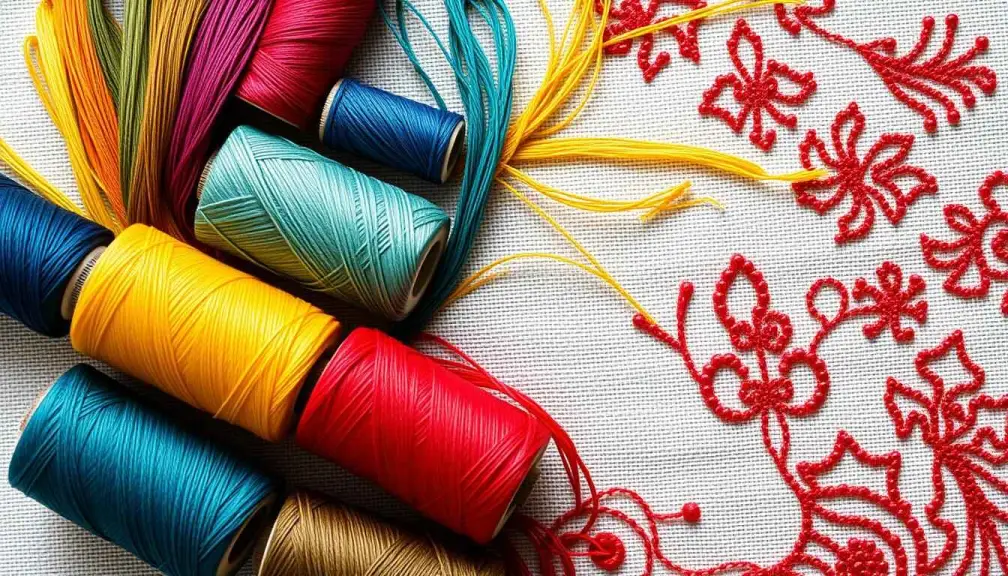
Popular designs include Kundan, Zardosi, and Aari embroidery. These use mirror work, bead, and lace embroidery for stunning patterns. The right colours and threads make your blouse truly unique and personal.
| Thread Embroidery Style | Colour Combinations | Fabric Compatibility |
|---|---|---|
| Kundan Embroidery | Pastel shades, gold and silver | Silk, cotton |
| Zardosi Embroidery | Bold and bright colours, gold and silver | Silk, velvet |
| Aari Embroidery | Earthy tones, warm and cozy colours | Cotton, linen |
Maintenance and Care Tips for Thread Work Blouses
Be careful with your threadwork blouses properly; it is key to keeping them looking great. Knowing how to clean and store them is vital. Different fabrics, such as silk, cotton, chiffon, and velvet, need special care.
For cleaning, hand wash delicate parts and dry clean dirty ones. Use mild detergent for water stains and baking soda for oil ones. Adding white vinegar to the rinse helps set colours and stop bleeding.
Cleaning Methods
- Hand wash delicate fabrics and intricacies
- Dry clean heavily soiled items
- Use mild detergent for water-based stains
- Use a baking soda paste for oil-based stains
Common Thread Work Mistakes to Avoid
Working on threadwork designs can be tricky. It’s key to avoid common mistakes that can ruin the look and life of your garment. These errors can be a real pain, but knowing what they are and how to avoid them is vital for better embroidery skills.
To get the look you want, keep these tips in mind:
- Choose the right threads, needles, and fabrics for your project.
- Ensure colour fastness to prevent fading or running of colours.
- Avoid sewing defects like open seams, incorrect stitching techniques, and wrong thread colours.
Following these tips and being aware of common mistakes can create stunning threadwork designs. Pick fabrics matching your stitching, and try different threads and methods to achieve the desired look.
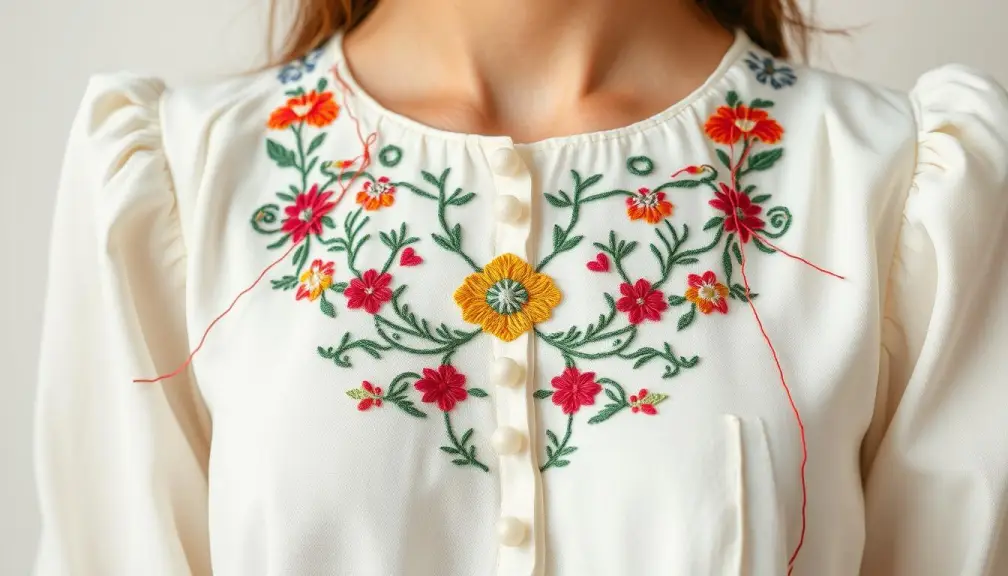
Some common errors to watch out for include:
- Incorrect tension, which can lead to puckering or distortion of the fabric.
- Insufficient or excessive stitching can affect the thread work’s durability.
- Poor choice of threads or fabrics can impact the garment’s overall appearance and quality.
| Common Thread Work Mistakes | Prevention Tips |
|---|---|
| Incorrect thread tension | Use consistent tension and adjust as needed |
| Insufficient or excessive stitching | Follow a pattern or guide to ensure even stitching |
| Poor choice of threads or fabrics | Research and select suitable materials for your project |
Customisation Options for Personal Style
Creating a unique threadwork design is all about personal style. You can mix different techniques and choose where and how to place them. This way, you can show off your style and make something special.
Research various threadwork methods, such as Zardosi, Aari, or French knot. Each one has a different look. Zardosi is great for detailed work, while Aari creates bold patterns. Mixing these can create a design that’s uniquely yours.
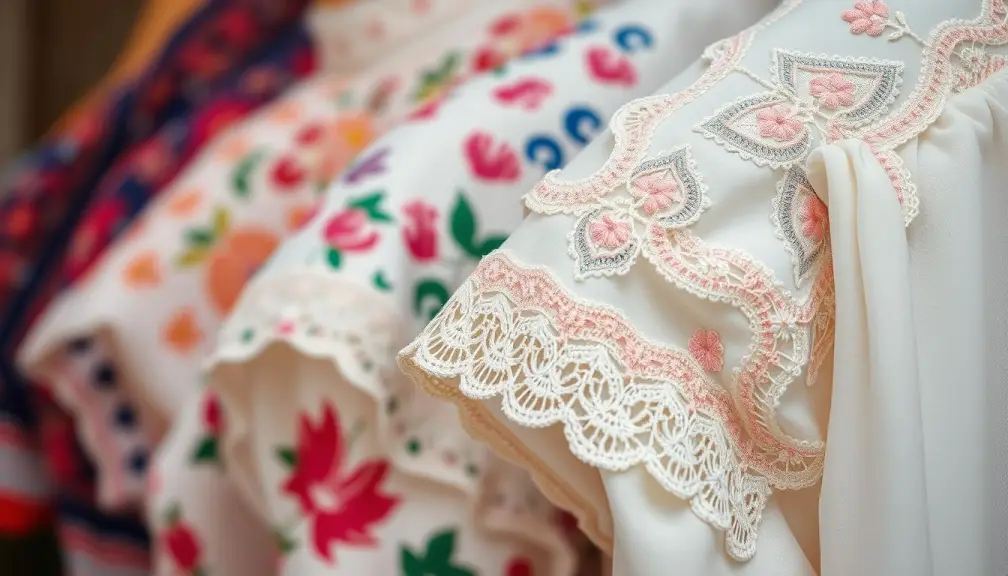
Think about where and how you want the design to appear. For example, you could put it on the sleeves, the neckline, or the hem. Also, pick colours and fabrics that match the threadwork. This way, you can create a design that shows off your style.
Mixing Different Thread Work Techniques
- Combine Zardosi and Aari for a unique, detailed design
- Use French knot and chain stitch for a delicate, lace-like pattern
- Experiment with different thread colours and fabrics to create a one-of-a-kind look
Exploring these options lets you make a beautiful and unique design. Whether you like traditional or modern designs, the most important thing is to have fun. Try different techniques and materials until you find the perfect mix.
Conclusion: Elevating Your Blouse Design with Perfect Thread Work
Threadwork is essential for making your blouse designs stand out. It can turn a simple blouse into a stunning piece, whether it’s for a saree or lehenga. The choice of techniques and materials greatly impacts the final look.
There’s a wide range of thread work styles to explore. It offers a unique way to add flair., from Aari’s work on mirroring work. You can express your style by picking the right thread colours and fabric combinations. This way, your blouse will perfectly mix tradition and modernity
FAQ
What is the significance of threadwork in Indian fashion?
Threadwork makes a simple saree or lehenga look stunning. It’s a key part of Indian fashion, and the land is loved for its beauty and history.
What are the different types of threadwork techniques used in blouse designs?
There are many threadwork styles, from Zardozi to modern geometric patterns. Knowing these techniques helps create unique and stunning blouses.
What are the essential tools and materials required for blouse thread work?
You need the right tools and materials for thread work. This includes threads, needles, and fabrics. The choice of these affects the design’s look and durability.
What is the history and significance of Zardozi thread work?
Zardozi is known for its detailed and beautiful designs. It uses gold and silver threads, beads, and sequins for luxury. Knowing the regional variations is key to creating authentic designs.
What are the key stitches used in threadwork designs?
French Knot and Chain Stitch are key in threadwork. They add texture and interest. The French Knot is versatile, while the Chain Stitch outlines and details.
What are the latest trends in contemporary thread work styles?
Modern threadwork includes minimalist designs and geometric patterns. These styles add elegance and sophistication to outfits.
What is AarAari’srk, and how is it used in blouse designs?
Aari work is a traditional embroidery technique in Indian fashion. It’s known for its detailed designs, making it popular for blouses. Its history and significance are worth appreciating.
How can one choose the right colour combinations and threads for threadwork blouses?
Choosing the right colours and threads is important for beautiful designs. Knowing seasonal trends and fabric compatibility helps pick the best threads and fabrics.
What are the proper maintenance and care tips for threadwork blouses?
Proper care is key to keeping threadwork blouses looking good. Knowing how to clean and store them prevents damage and keeps designs intact.
What are the common mistakes to avoid when creating thread work designs?
Knowing common errors can help you avoid them. Understanding these errors can improve your embroidery skills and achieve the desired look.
How can one customize thread work designs for personal style?
Customizing threadwork designs is essential for personal style. Mixing techniques and considering placement and design are key to achieving the desired look.
Other Topics on Blouse Design