
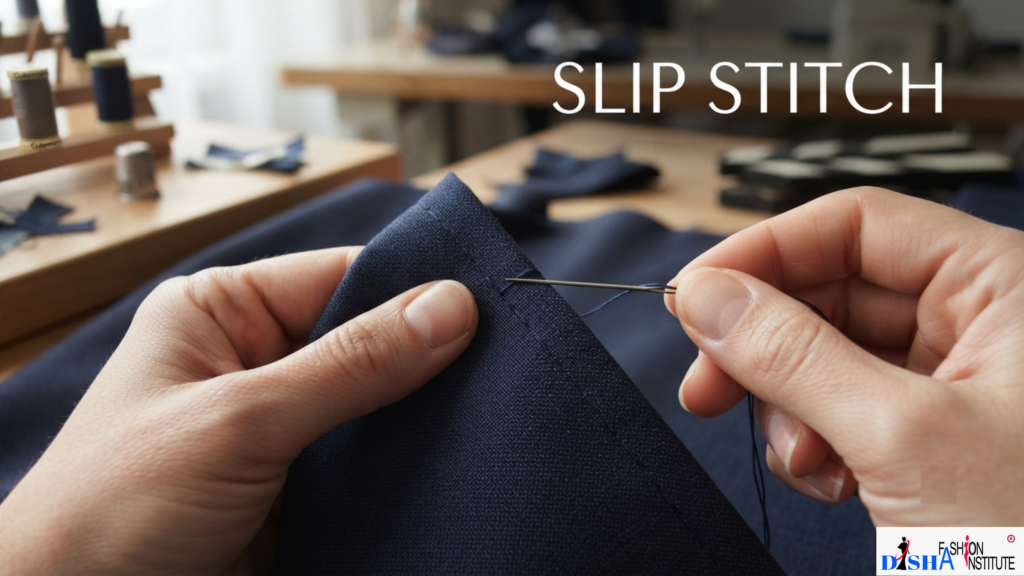
Slip stitch is a discreet hand stitch where the needle catches a very small amount of fabric before moving back into the folded edge. Most of the thread remains hidden inside the fold, which makes the finished stitching difficult to see from the outside.
Unlike visible topstitching, slip stitch sewing focuses on creating a clean finish without adding an obvious line of thread to the garment.
It is particularly useful when working on areas where you want the stitching to blend into the fabric.
Why Is Slip Stitch Used?
The main purpose of a slip stitch is to secure a folded fabric edge neatly while keeping the stitching as hidden as possible.
Common uses include:
- Finishing folded hems
- Attaching linings
- Securing facings
- Finishing bias binding
- Closing small openings
- Hand-finishing garment edges
- Making minor repairs
- Securing some trims and appliqué details
Slip stitching is often chosen when a visible row of machine stitching would affect the appearance of the garment. It is therefore a useful technique for clean and professional garment finishing.
How Does Slip Stitch Work?
The basic idea behind a slip stitch is simple. The thread travels mostly inside the folded edge, while the needle takes only a tiny “bite” of the fabric on the opposite side.
After taking the small stitch, the needle goes back into the fold and comes out a short distance away. This process is repeated along the edge.
When the stitches are small and the thread matches the fabric, very little stitching is visible on the outside.
How to Sew a Slip Stitch by Hand
Follow these simple steps to learn how to sew a slip stitch:
- Prepare the Fold
Press the fabric edge neatly before stitching. A well-pressed fold makes the process easier and helps produce a cleaner result.
- Choose Your Thread
Use a thread that closely matches the fabric. A matching thread helps the finished stitches blend into the garment.
- Secure the Thread
Start from inside the fold so the beginning of the thread is hidden. Secure the thread without leaving a large visible knot.
- Take a Small Stitch
Insert the needle into the fabric opposite the folded edge and catch only a tiny amount of fabric.
- Move Back Into the Fold
Bring the needle back into the folded edge. Keep most of the thread inside the fold.
- Repeat Along the Edge
Move a short distance forward and repeat the same process. Keep the stitches small and reasonably even.
- Maintain Gentle Tension
Do not pull the thread too tightly. Excessive tension can cause the fabric to pucker and make the stitching more noticeable.
- Finish Securely
When you reach the end, secure the thread inside the fold and trim the excess thread neatly.
With practice, slip stitch hand sewing becomes faster and produces a much more consistent finish.
Where Is Slip Stitch Used?
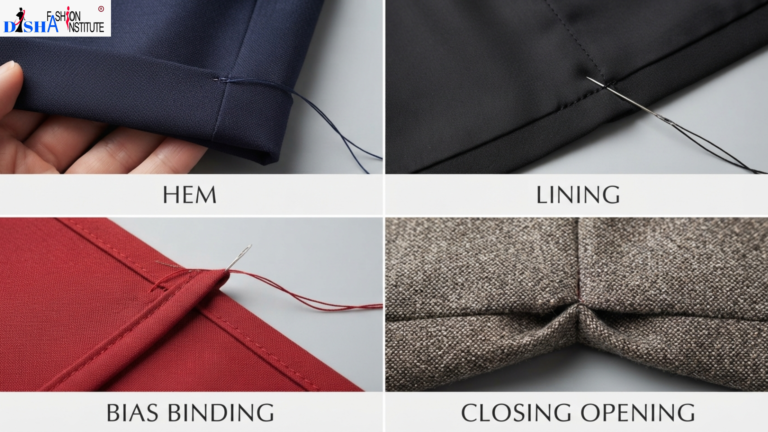
Slip stitch is useful in many areas of garment construction and sewing.
Hems
It can be used to secure folded hems when you want to avoid a visible line of machine stitching.
Linings
A slip stitch can help secure lining edges neatly inside garments. It is also useful for hand-finishing areas where the lining needs to stay in place.
Bias Binding
Slip stitching can be used to secure the folded edge of bias binding on the inside of a garment while keeping the stitches discreet.
Facings
Neckline and waistband facings can sometimes be secured with hand stitching for a clean inside finish.
Closing Openings
A slip stitch can be useful for closing small openings where you want the final seam to look neat and unobtrusive.
Repairs
For certain small repairs, slip stitching can help close an opening without creating an obvious row of stitches on the outside.
Slip Stitch vs Blind Stitch
The terms slip stitch and blind stitch can overlap depending on the sewing method or source. Both are associated with discreet or nearly invisible hand finishing, particularly around hems.
However, “blind stitch” is often used specifically for hemming techniques where the stitches are designed to be minimally visible on the outside. “Slip stitch” is commonly used more broadly for joining folded edges and hand-finishing garments.
So, rather than treating the names as completely interchangeable, it is better to consider the specific application and sewing instructions being followed.
Slip Stitch vs Ladder Stitch
A ladder stitch is closely related to the idea of an invisible hand stitch and is frequently used to close openings between two folded edges.
The terminology can vary between sewing resources. In some contexts, ladder stitch and slip stitch may be treated as similar techniques, while other tutorials distinguish them based on how the fabric edges are positioned and joined.
For beginners, the important point is to understand the stitching method and the desired finish rather than relying only on the name.
Tips for a Neat Slip Stitch
Keep these tips in mind when practicing slip stitch sewing:
- Use a fine, sharp hand-sewing needle.
- Choose thread that matches the fabric.
- Keep the stitches small and consistent.
- Catch only a tiny amount of visible fabric.
- Avoid pulling the thread too tightly.
- Press the fabric fold before stitching.
- Keep the starting and finishing thread hidden.
- Practice on a fabric scrap before working on a finished garment.
The smaller and more controlled your stitches are, the less noticeable the finished stitching will generally be.
Common Slip Stitch Mistakes
Beginners often make a few simple mistakes when learning this technique:
Making stitches too large: Large stitches can become visible from the outside.
Using contrasting thread: Unless you want decorative stitching, contrasting thread can make the stitches stand out.
Pulling the thread too tightly: This may create puckering along the edge.
Catching too much fabric: Taking a large bite of the outer fabric makes the stitch easier to see.
Uneven stitching: Irregular stitch spacing can make the finish look untidy.
Skipping pressing: A poorly folded edge makes accurate hand stitching more difficult.
Final Thoughts
A slip stitch is a simple but valuable hand-sewing technique for creating clean and discreet garment finishes. It is especially useful for hems, linings, facings, bias binding, and closing small openings where visible stitching is not desired.
Once you understand how the needle moves between the folded edge and the fabric, the technique becomes easy to practice. With matching thread, small stitches, and gentle tension, slip stitch can give your sewing projects a polished and professional finish.
Join Disha Fashion Institute
You can also visit our Homepage or explore our different Course pages to learn more about our programs. If you need any guidance related to courses like Basic Tailoring, Diploma in Tailoring, Fashion Designing, or other fashion-related courses, feel free to contact us. Our team will understand your requirements, skill level, and career goals to guide you toward the most suitable course that matches your learning needs. you can check our YouTube Channel we post our Institute and tutorial over there.