
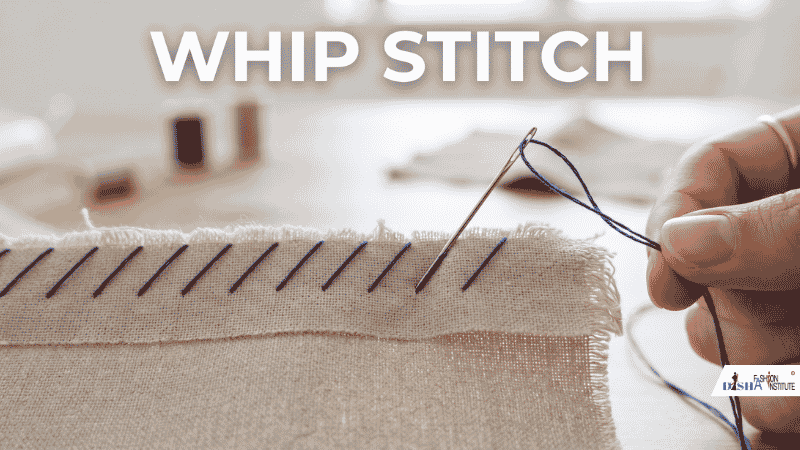
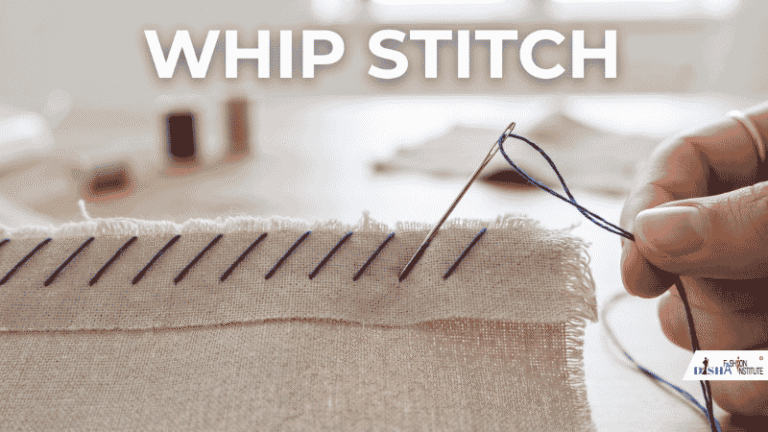
A whip stitch is a hand-sewing stitch made by taking the needle from one side of the fabric and bringing it over the edge before passing it through the fabric again. Repeating this movement creates diagonal stitches that wrap around the fabric edge.
The stitches can be made close together for a stronger finish or spaced farther apart for a lighter decorative effect.
Whip stitch is particularly useful when working with fabric edges, felt, appliqué pieces, and projects where a simple hand-sewn finish is needed.
How Does Whip Stitch Work?
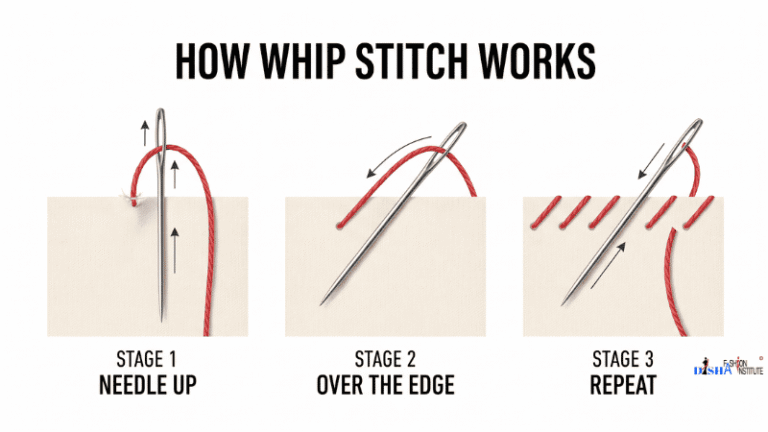
The basic technique of making a whip stitch is quite simple.
To make a whip stitch:
- Bring the threaded needle through the fabric near the edge.
- Move the needle over the fabric edge.
- Insert it back through the fabric from the same side.
- Pull the thread gently to create a diagonal stitch around the edge.
- Repeat the process at regular intervals.
As the process continues, the stitches form a series of diagonal lines wrapping around the fabric edge.
Keeping the stitches evenly spaced and maintaining consistent thread tension helps create a clean and professional finish.
What Does Whip Stitch Look Like?
Whip stitch is easy to recognize because the thread travels diagonally over the edge of the fabric.
Its appearance can change depending on the thread thickness, stitch spacing, and fabric being used.
A closely worked whip stitch creates a more secure edge, while wider stitches can create a visible decorative effect.
Where Is Whip Stitch Used?
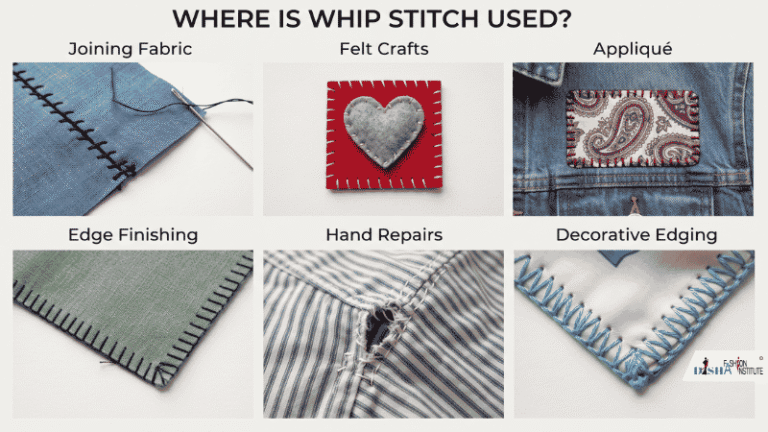
Whip stitch has several practical and decorative applications in sewing and textile work.
Common uses include:
- Joining fabric edges
- Securing felt pieces
- Appliqué work
- Closing openings by hand
- Finishing raw edges
- Hand-sewn repairs
- Textile crafts
- Decorative edging
It is especially useful when the edge of the material needs to be held together or secured without using a sewing machine.
Whip Stitch in Appliqué
Whip stitch can be used to attach one piece of fabric or felt onto another surface in appliqué work.
The needle passes around the edge of the appliqué piece, helping hold it in place. A matching thread can make the stitching less noticeable, while a contrasting thread can turn the stitch into part of the decoration.
The final appearance depends on the stitch spacing, thread colour, and precision of the stitching.
What Are the Advantages of Whip Stitch?
Easy to Learn
Whip stitch uses a simple repeated needle movement, making it suitable for beginners.
Useful for Hand Sewing
It can be performed without a sewing machine, making it convenient for small repairs, crafts, and finishing work.
Good for Edges
The stitching wraps around the fabric edge, helping secure pieces and prevent them from separating.
Decorative Possibilities
Using contrasting thread can make the diagonal stitches an intentional part of the design.
Whip Stitch vs Running Stitch
Whip stitch and running stitch are both basic hand-sewing techniques, but their structures are different.
In running stitch, the needle moves in and out of the fabric along a line, creating separate stitches on the surface. In whip stitch, the thread passes over the fabric edge, creating diagonal stitches that wrap around the edge.
Therefore, running stitch is commonly used for simple lines and decorative stitching, while whip stitch is particularly useful for edges, joining pieces, and securing fabric.
Common Whip Stitch Problems
Beginners may encounter a few problems when practicing whip stitch.
Common issues include:
- Uneven stitch spacing
- Pulling the thread too tightly
- Loose stitches
- Inconsistent stitch angles
- Distorted fabric edges
To improve the finish, try to maintain similar stitch spacing and pull the thread firmly but gently. Excessive tension can cause the fabric edge to gather or distort.
Why Should Beginners Learn Whip Stitch?
Learning whip stitch gives beginners another useful hand-sewing technique for working with fabric edges and small textile projects. It can also help develop control over needle movement, thread tension, and stitch spacing.
Once the basic technique is comfortable, you can use different thread colours and stitch spacing to create both functional and decorative finishes.
Conclusion
Whip stitch is a simple and versatile hand-sewing technique in which thread passes diagonally over the edge of fabric to create a series of wrapping stitches. It can be used for joining fabric, securing edges, appliqué, repairs, and decorative textile work.
For beginners learning sewing and garment construction, whip stitch is a useful basic technique that can be practiced easily and applied to many small sewing projects.
Join Disha Fashion Institute
You can also visit our Homepage or explore our different Course pages to learn more about our programs. If you need any guidance related to courses like Basic Tailoring, Diploma in Tailoring, Fashion Designing, or other fashion-related courses, feel free to contact us. Our team will understand your requirements, skill level, and career goals to guide you toward the most suitable course that matches your learning needs. you can check our YouTube Channel we post our Institute and tutorial over there.