
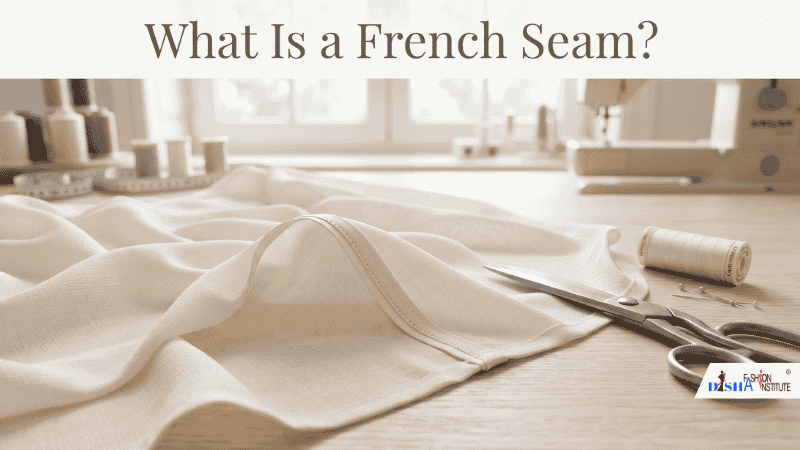
A French seam is a type of enclosed seam made by stitching fabric pieces together in two stages. The first stitching is done with the wrong sides of the fabric facing each other. The seam allowance is then trimmed, folded over to enclose the raw edges, and stitched again with the right sides facing each other.
The finished seam hides the raw edges inside the stitching, leaving a clean appearance on both sides of the fabric. Unlike a simple seam finish, a French seam encloses the raw edges within the seam itself.
Why Is a French Seam Important?
French seams offer several benefits, particularly when working with lightweight fabrics.
- Encloses raw edges: Helps prevent fraying by hiding cut fabric edges.
- Creates a neat finish: Gives the inside of a garment a clean, professional appearance.
- Works well with delicate fabrics: Is useful for chiffon, voile, lawn, and other lightweight woven materials.
- Improves durability: Protects the seam allowance from direct exposure during wear and washing.
However, French seams can create extra bulk in thick fabrics, so they are generally better suited to lightweight materials.
How Does a French Seam Work?
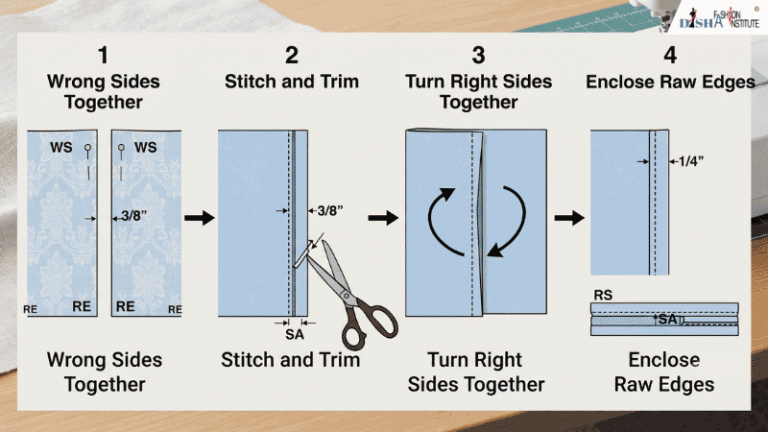
Follow these steps to make a French seam:
- Place the fabric pieces together: Position them with the wrong sides facing each other.
- Sew the first seam: Stitch using a narrow seam allowance, often around 6 mm, depending on the pattern and fabric.
- Trim the seam allowance: Carefully trim the raw edges to reduce bulk.
- Fold the seam: Turn the fabric so the right sides face each other, enclosing the trimmed raw edges inside the fold.
- Sew the second seam: Stitch again so the raw edges are completely enclosed.
- Press the seam: Press the finished seam to one side for a smooth, neat result.
The exact seam allowances depend on the pattern. Make sure the second stitching line encloses all the raw edges.
Where Is a French Seam Used?
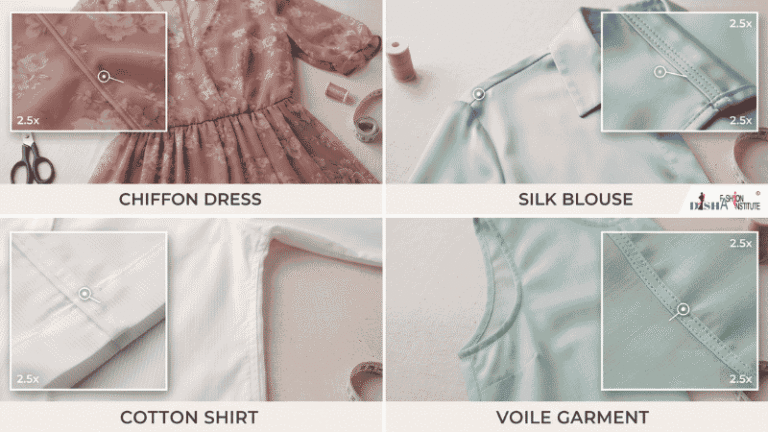
French seams are commonly used in garments made from lightweight woven fabrics, including:
- Chiffon dresses: Help create a clean finish in sheer fabric.
- Silk blouses: Keep the inside of delicate garments neat.
- Lightweight shirts: Provide a tidy finish for suitable side and sleeve seams.
- Voile and lawn garments: Help control fraying in fine cotton fabrics.
- Sheer curtains and other lightweight projects: Enclose raw edges for a polished finish.
French seams are most suitable for straight or gently curved seams. They are less practical for thick fabrics, bulky intersections, and many tightly curved garment areas.
French Seam vs. Plain Seam
A plain seam joins two fabric pieces with a single line of stitching, leaving the seam allowance edges exposed unless another finishing method is added.
A French seam uses two lines of stitching to enclose the raw edges inside the seam. This makes it especially useful when the inside of the garment needs to look neat without a separate overlock finish.
Choose a plain seam when speed, easy alterations, or reduced bulk is important. Choose a French seam when working with suitable lightweight fabrics and a clean enclosed finish is desired.
Common French Seam Mistakes to Avoid
- Leaving the first seam allowance too wide, making the finished seam bulky.
- Trimming too close to the first stitching line and accidentally cutting the stitches.
- Failing to enclose every raw edge in the second seam.
- Skipping pressing between steps.
- Using the technique on thick fabrics that are difficult to fold neatly.
Practising on a fabric scrap first will help you choose the right seam allowance and achieve a cleaner result.
Final Thoughts
A French seam is a practical sewing technique that encloses raw fabric edges to create a neat, durable finish. It is especially useful for chiffon, silk, voile, and other lightweight woven fabrics.
By learning the correct stitching, trimming, folding, and pressing steps, beginners can improve their garment construction skills and produce clothing that looks professional inside and out.
Join Disha Fashion Institute
You can also visit our Homepage or explore our different Course pages to learn more about our programs. If you need any guidance related to courses like Basic Tailoring, Diploma in Tailoring, Fashion Designing, or other fashion-related courses, feel free to contact us. Our team will understand your requirements, skill level, and career goals to guide you toward the most suitable course that matches your learning needs. you can check our YouTube Channel we post our Institute and tutorial over there.