
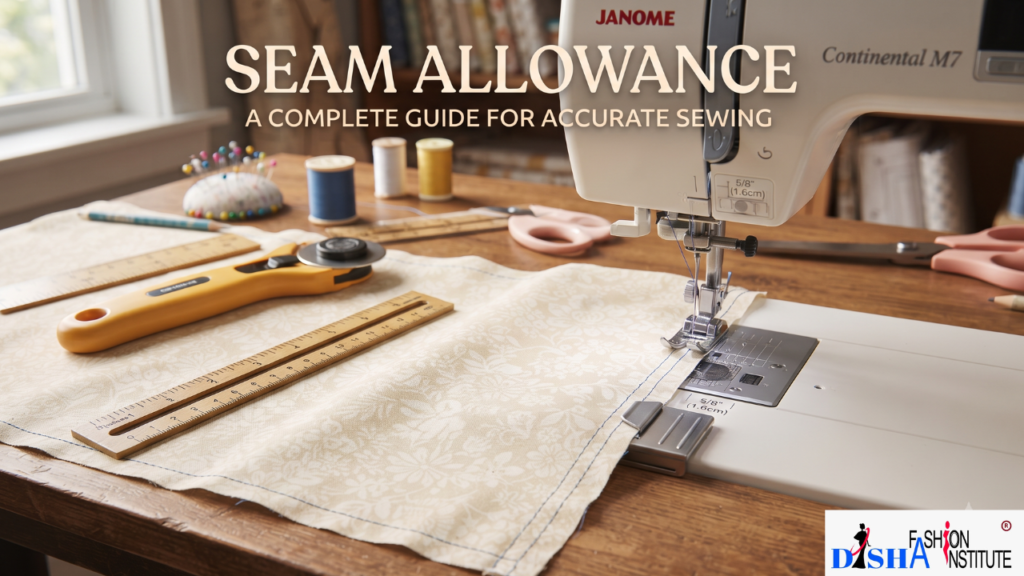
What Is Seam Allowance?
Seam allowance is the extra fabric between the stitching line and the raw edge of a fabric or pattern piece. It gives enough fabric for joining two pieces securely and allows the seam to be finished properly.
For example, if the stitching line is marked 1 cm inside the fabric edge, the 1 cm space between that stitching line and the edge is the seam allowance.
It is important not to confuse the seam line with the cutting line. The seam line indicates where the pieces are joined, while the cutting line includes the additional fabric needed for sewing.
Why Is Seam Allowance Important?
Correct seam allowance helps maintain accuracy throughout garment construction. It can:
- Provide sufficient fabric for a strong seam
- Help pattern pieces fit together correctly
- Make seam finishing easier
- Provide some room for alterations where required
- Reduce the risk of fraying or weak seams
- Help garments achieve a clean and professional finish
An allowance that is too narrow may make a seam difficult to sew or finish, while an unnecessarily wide allowance can create extra bulk and waste fabric.
What Is the Standard Seam Allowance?
There is no single standard seam allowance that applies to every garment. The correct measurement depends on the pattern, fabric, seam location, sewing method, and the type of finish required.
For many garment-sewing applications, allowances around 1 cm to 1.5 cm are commonly used. A 1.5 cm allowance is also widely seen in dressmaking patterns, while smaller allowances may be suitable for curves, lightweight fabrics, or particular construction techniques.
A simple reference is:
Garment Area | Common Allowance |
General seams | 1–1.5 cm |
Necklines and curved areas | Around 0.6–1 cm |
Small garment sections | Around 0.6–1 cm |
Hems | Usually wider than regular seams |
Alteration areas | May require additional fabric |
These are practical guidelines rather than fixed rules. Always follow the instructions provided with a particular sewing pattern.
Types of Seam Allowance
Different parts of a garment may require different allowances.
Standard Seam Allowance
Used for many basic garment seams such as side seams, shoulder seams, and other construction seams. The exact width depends on the pattern and sewing method.
Narrow Seam Allowance
A smaller allowance can be useful around curved or smaller sections where excess fabric could create unnecessary bulk.
Hem Allowance
A hem requires additional fabric so the raw edge can be folded and secured. The required amount depends on the garment and the desired hem finish.
Seam Allowance for Curves
Necklines, armholes, and other curved sections often use a narrower allowance. After stitching, clipping or other appropriate finishing techniques can help the seam follow the curve smoothly.
What Is Grading Seam Allowance?
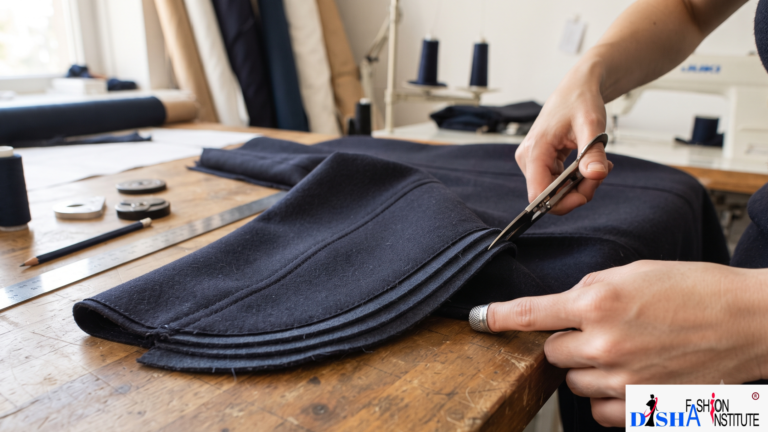
Grading seam allowance means trimming the different layers of a seam to different widths rather than leaving every layer equally wide.
When several layers of fabric, lining, interfacing, or facing meet, they can create unwanted thickness. Grading reduces this bulk by trimming the layers progressively, allowing the finished edge to appear flatter and smoother.
This technique is particularly useful for areas such as:
- Collars
- Cuffs
- Facings
- Lapels
- Necklines
- Other enclosed or layered seams
The goal is not simply to remove fabric, but to reduce thickness without weakening the seam.
Seam Allowance Tool: What Can You Use?
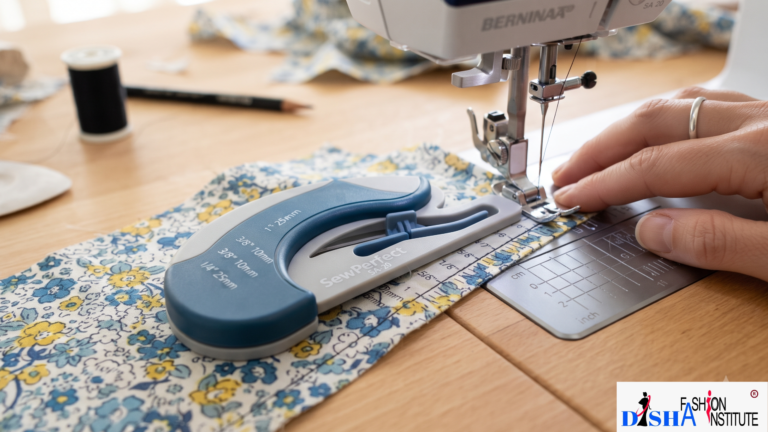
Using the right seam allowance tool makes measuring and stitching much easier, especially when working with patterns.
Useful tools include:
- Seam gauge: Useful for measuring and marking short, consistent distances.
- Ruler: Helpful for adding or checking seam allowance on patterns.
- Pattern-making ruler: Useful when creating accurate pattern lines and curves.
- Sewing machine seam guide: Helps maintain a consistent stitching distance while sewing.
- Tailor’s chalk or fabric marker: Useful for transferring seam or stitching lines onto fabric.
For digital pattern making, specialized pattern software can also provide tools for adding, adjusting, or removing seam allowances accurately.
Common Seam Allowance Mistakes
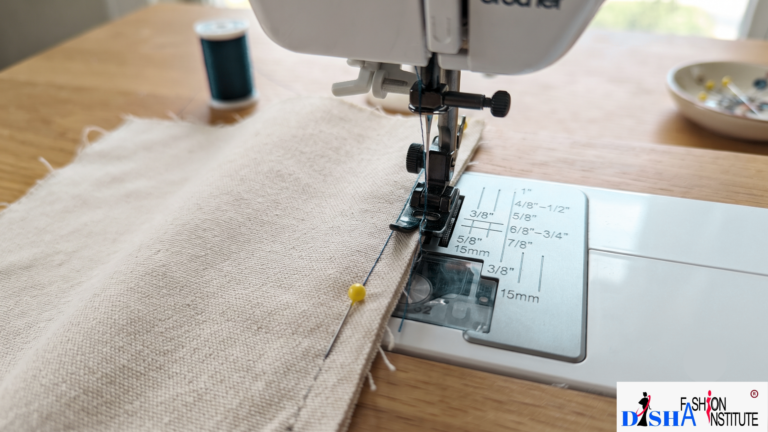
Even a well-drafted pattern can produce fitting or construction problems when seam allowance is handled incorrectly.
Avoid these common mistakes:
- Cutting without checking the allowance – Always confirm whether the pattern already includes seam allowance.
- Using different measurements randomly – Keep the required allowance consistent along matching seams.
- Forgetting hem allowance – A hem needs enough fabric for its intended finish.
- Ignoring curved sections – Curves often require different handling from straight seams.
- Leaving excessive bulk – Grade or trim seams where appropriate.
- Sewing without checking the seam guide – Consistent stitching improves the accuracy of the finished garment.
Remember: you cannot always correct an allowance that has been cut too small, so checking the pattern before cutting is an important step.
Join Disha Fashion Institute
You can also visit our Homepage or explore our different Course pages to learn more about our programs. If you need any guidance related to courses like Basic Tailoring, Diploma in Tailoring, Fashion Designing, or other fashion-related courses, feel free to contact us. Our team will understand your requirements, skill level, and career goals to guide you toward the most suitable course that matches your learning needs. you can check our YouTube Channel we post our Institute and tutorial over there.