
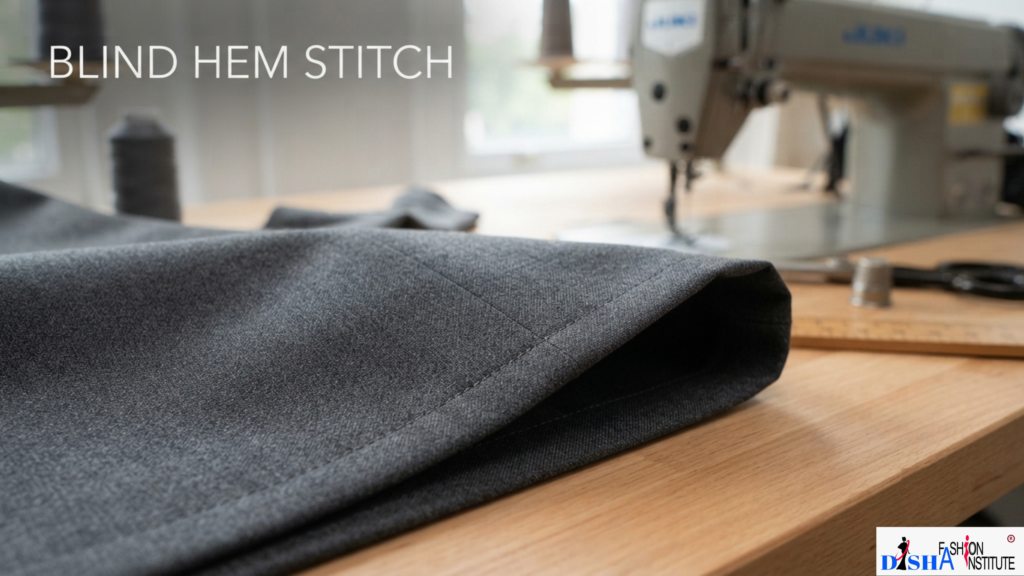
A blind hem stitch is designed to secure a folded hem while keeping the stitches almost invisible from the right side of the fabric.
When sewn by hand, the needle catches only a very small amount of the main fabric before returning to the folded hem. With a sewing machine, the blind hem stitch typically combines straight stitching with occasional zigzag-like stitches that catch the folded fabric. Correct folding and stitch positioning are important for keeping the finished stitches discreet.
The goal is simple: secure the hem firmly while showing as little stitching as possible on the outside.
Why Is Blind Hem Stitch Used?
The main advantage of a blind hem stitch is its clean appearance.
It is commonly used for:
- Trousers and pants
- Skirts
- Dresses
- Formal garments
- Curtains
- Coats and other garments
- Straight or gently shaped hems
- Garments where visible topstitching is not desired
Instead of creating a clearly visible line of stitching across the hem, the technique places most of the stitching inside the folded area.
How Does Blind Hem Stitch Work?
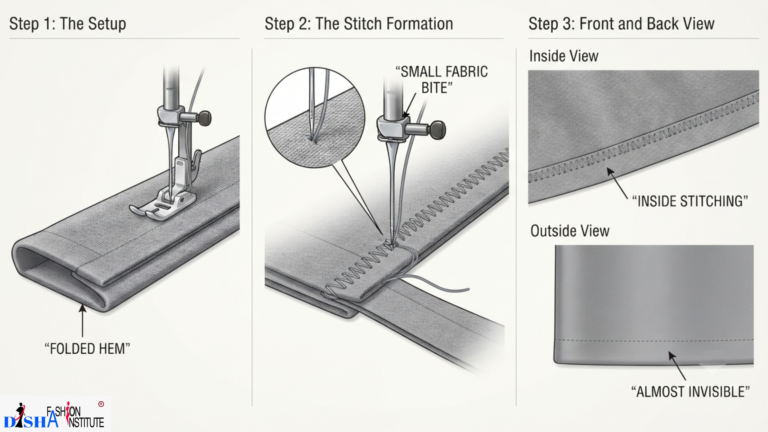
The technique depends heavily on how the fabric is folded.
The hem is first folded and pressed into position. The fabric is then arranged so that the machine or hand needle can secure the hem while taking only a tiny bite of the garment fabric.
On a sewing machine, the blind hem stitch makes several straight stitches within the hem and periodically makes a wider stitch that catches the fold of the garment. When the fabric is unfolded, only tiny points of stitching should be visible from the right side.
This careful positioning is what creates the “blind” or nearly invisible appearance.
How to Sew a Blind Hem Stitch by Hand
A hand-sewn blind hem is a useful option when you do not want to use a sewing machine.
1. Prepare the Hem
Turn the raw edge under and press the hem neatly. A clean, stable fold makes the stitching easier.
2. Thread the Needle
Use a fine needle and thread that closely matches the fabric.
3. Hide the Starting Point
Start from inside the folded hem so that the knot and thread tail remain hidden.
4. Catch a Tiny Amount of Fabric
Take a very small stitch from the main garment fabric. Try to catch only a few threads rather than piercing deeply through the fabric.
5. Stitch the Fold
Move the needle back into the folded hem and secure it before repeating the process.
6. Continue Along the Hem
Repeat the small stitches at regular intervals. Keep the thread tension gentle so the fabric remains smooth.
7. Secure the End
Finish with a small knot hidden inside the hem and trim the excess thread.
The smaller and more controlled the stitches are, the less noticeable the finished hem will be.
How to Sew a Blind Hem Stitch by Machine
If your sewing machine has a blind hem stitch, the process can be much faster.
1. Prepare and Press the Hem
Fold the hem to the desired length and press it carefully.
2. Select the Blind Hem Stitch
Choose the blind hem stitch on your machine. Some machines also provide a separate stretch blind hem stitch for stretch fabrics.
3. Attach the Blind Hem Foot
If your machine has a blind hem presser foot, attach it according to the machine instructions. The guide helps keep the folded edge in the correct position.
4. Fold the Fabric Correctly
Arrange the garment so the machine can stitch along the fold while the needle catches only a small amount of the main fabric.
5. Test the Stitch
Before sewing the actual garment, test the settings on a scrap of the same or similar fabric. Adjust the stitch width and position if the stitches are too visible.
6. Sew Slowly
Guide the fabric carefully and keep the fold aligned with the presser-foot guide.
7. Unfold and Press
After completing the hem, unfold the fabric and press it carefully. The finished hem should appear smooth with minimal visible stitching.
Where Is Blind Hem Stitch Used?
Trousers and Pants
A blind hem is commonly used on trousers when you want to avoid a prominent line of stitching around the leg.
Skirts
It works well for many skirt hems where a discreet finish is preferred.
Dresses
Formal and dress garments can benefit from an almost invisible hem, especially when visible topstitching would distract from the design.
Curtains
Blind hemming can also be used for curtain edges when a clean appearance is important.
Coats and Other Garments
Depending on the fabric and hem construction, blind hemming can be useful for various garments where the hem needs to remain visually subtle.
Blind Hem Stitch vs Regular Hem Stitch
The main difference is visibility.
A regular machine hem usually has a continuous line of visible stitching on the outside of the garment. A blind hem stitch is designed to hide most of the stitching inside the folded hem, leaving only tiny points visible, if any.
This makes the blind hem particularly useful for garments where you want the hem to blend into the fabric.
Hand Blind Hem vs Machine Blind Hem
Both methods can create a discreet finish, but the process is different.
Hand blind hem:
Uses a needle and thread and allows very precise control over each individual stitch. It can be useful for delicate finishing or areas where machine stitching is difficult.
Machine blind hem:
Uses the machine’s blind hem stitch, often together with a blind hem presser foot. It is generally faster once the fabric is correctly prepared.
Tips for a Neat Blind Hem
For a professional-looking blind hem stitch, remember these tips:
- Use matching thread.
- Press the hem carefully before stitching.
- Test the stitch on scrap fabric first.
- Keep the needle from catching too much of the main fabric.
- Sew slowly when learning.
- Use a blind hem foot if your machine supports one.
- Keep the folded edge properly aligned.
- Avoid pulling or stretching the fabric.
- Press the finished hem after sewing.
The most important factor is controlling how much fabric the needle catches. If the needle catches too much of the garment fabric, the stitches become more visible on the outside.
Common Blind Hem Stitch Mistakes
Stitches are too visible: The needle may be catching too much of the main fabric.
Incorrect fabric folding: Poor preparation can prevent the machine from forming the blind hem correctly.
Uneven stitching: Inconsistent positioning can create an irregular hem.
Wrong thread colour: A contrasting thread can make tiny stitches easier to notice.
Sewing too quickly: Beginners can easily lose control of the fold when sewing at high speed.
Skipping the test: Always test the stitch and settings before working on the finished garment.
Final Thoughts
A blind hem stitch is an excellent technique for creating a clean, professional-looking hem with minimal visible stitching. It can be sewn by hand or with a sewing machine and is commonly used for trousers, skirts, dresses, curtains, and other projects.
Once you understand the correct folding, needle position, and thread tension, creating a neat blind hem becomes much easier. Practice on scrap fabric first, then use the technique on your garments for a polished and discreet finish.
Join Disha Fashion Institute
You can also visit our Homepage or explore our different Course pages to learn more about our programs. If you need any guidance related to courses like Basic Tailoring, Diploma in Tailoring, Fashion Designing, or other fashion-related courses, feel free to contact us. Our team will understand your requirements, skill level, and career goals to guide you toward the most suitable course that matches your learning needs. you can check our YouTube Channel we post our Institute and tutorial over there.