
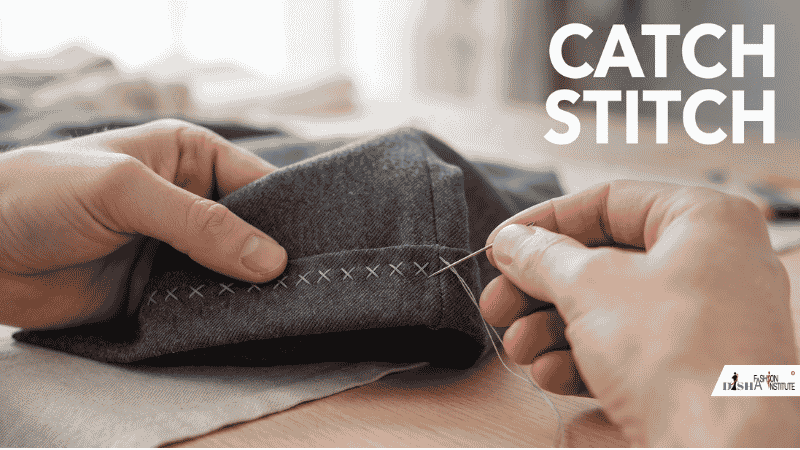
A catch stitch is a hand-sewing stitch made by taking small diagonal stitches between two layers or sections of fabric. The stitches cross from side to side, creating a pattern that resembles small X-shaped or crossed stitches.
It is commonly used for securing hems because the diagonal structure allows the fabric to retain some flexibility instead of being held by a completely straight row of stitches.
Catch stitch can be worked by hand using a needle and thread and is particularly useful in dressmaking and tailoring.
How Does Catch Stitch Work?
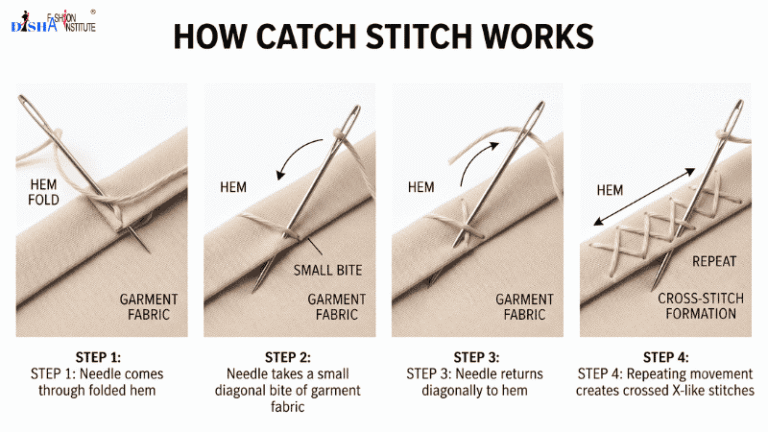
The basic technique of making a catch stitch involves taking alternating diagonal stitches between the folded hem and the main fabric.
To make a catch stitch:
- Bring the needle through the folded hem from the inside.
- Move diagonally and take a very small bite of the main fabric.
- Bring the needle back to the hem and take another small diagonal stitch.
- Continue alternating between the hem and the garment fabric.
- Keep the stitches loose enough to allow the hem to move naturally.
The finished stitches form a series of small crossed or X-like patterns on the inside of the garment.
The key is to avoid pulling the thread too tightly. A relaxed thread tension helps prevent the hem from becoming stiff or puckered.
What Does Catch Stitch Look Like?
Catch stitch is usually recognized by its small diagonal stitches that alternate from one side to another.
When viewed from the inside of a garment, the stitches create a distinctive crossed pattern. When worked carefully, only tiny points of thread may be visible from the outside.
The size and spacing of the stitches can be adjusted depending on the fabric and the purpose of the stitching.
Where Is Catch Stitch Used?
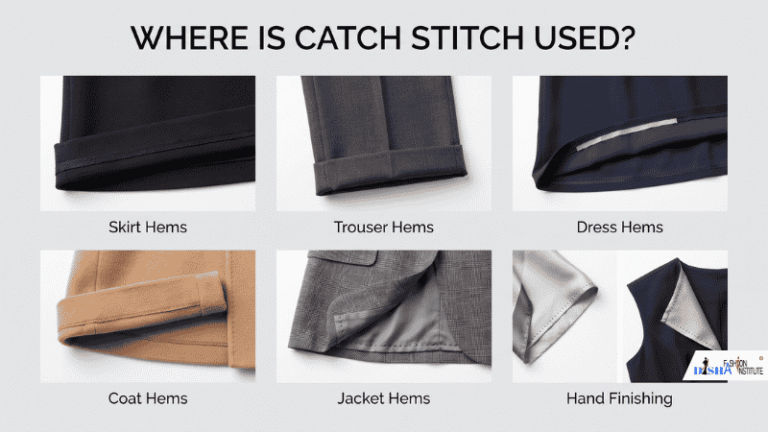
Catch stitch is most commonly used for securing hems and fabric edges in garment construction.
Common applications include:
- Securing skirt hems
- Trouser and pant hems
- Dress hems
- Coat and jacket hems
- Securing folded fabric edges
- Lightweight hand finishing
- Tailoring and dressmaking
It is particularly useful when the hem needs to remain flexible and the stitches should not create a heavy or rigid finish.
Catch Stitch in Garment Construction
Catch stitch is especially useful when finishing garments by hand. After a hem has been folded and pressed, catch stitches can be used to secure it to the garment without creating a prominent straight line of stitching.
For delicate or lightweight fabrics, the stitch size and thread tension should be adjusted carefully. Taking very small bites of the fabric can help reduce visible marks on the outside.
For heavier fabrics, slightly stronger and more closely spaced stitches may be appropriate.
What Are the Advantages of Catch Stitch?
Flexible Hem Finish
The crossed stitch structure allows the hem to retain some movement, making it useful for garments that need flexibility.
Neat Appearance
When worked carefully, only very small portions of the stitch may be visible from the outside of the garment.
Useful for Hand Finishing
Catch stitch is an excellent option when a garment requires a hand-sewn hem rather than machine stitching.
Suitable for Tailoring
It can be used in dressmaking and tailoring for finishing a variety of garments and fabric edges.
Catch Stitch vs Whip Stitch
Catch stitch and whip stitch are both useful hand-sewing techniques, but they are formed differently.
In whip stitch, the thread passes diagonally over the edge of the fabric, creating stitches that wrap around the edge. In catch stitch, the needle moves between the hem and the garment fabric, producing small crossed or X-like stitches.
Whip stitch is often useful for joining or securing edges, while catch stitch is particularly useful for securing folded hems.
Common Catch Stitch Problems
Beginners may experience a few problems while learning catch stitch.
Common issues include:
- Stitches becoming too tight
- Uneven diagonal stitches
- Large visible stitches on the outside
- Uneven spacing
- Fabric puckering
The best way to achieve a neat finish is to use consistent stitch spacing and maintain gentle thread tension. Avoid pulling the thread tightly after every stitch.
Why Should Beginners Learn Catch Stitch?
Learning catch stitch is useful for anyone interested in tailoring, dressmaking, or hand sewing. It teaches important skills such as controlling stitch size, maintaining thread tension, and securing fabric without creating an overly rigid seam.
Once you understand the basic movement, you can use catch stitch confidently for different types of hems and hand-finishing projects.
Conclusion
Catch stitch is a practical hand-sewing technique commonly used to secure hems and folded fabric edges. Its crossed diagonal structure provides a flexible and relatively discreet finish, making it valuable in tailoring and dressmaking.
For beginners, learning catch stitch is a useful step toward mastering professional hand-finishing techniques and creating clean, well-finished garments.
Join Disha Fashion Institute
You can also visit our Homepage or explore our different Course pages to learn more about our programs. If you need any guidance related to courses like Basic Tailoring, Diploma in Tailoring, Fashion Designing, or other fashion-related courses, feel free to contact us. Our team will understand your requirements, skill level, and career goals to guide you toward the most suitable course that matches your learning needs. you can check our YouTube Channel we post our Institute and tutorial over there.