
Seam grading is the process of trimming and shaping the seam allowances of a stitched seam so that the fabric layers do not create excessive bulk. Instead of leaving all seam allowances at the same width, they may be trimmed to different widths to help them lie neatly.
This technique is particularly useful when several fabric layers meet or when a seam needs to lie flat against the body.
Seam grading is different from pattern grading. Pattern grading means increasing or decreasing pattern sizes to create different garment sizes, whereas seam grading focuses on reducing bulk in the seam allowances after stitching.
How Does Seam Grading Work?
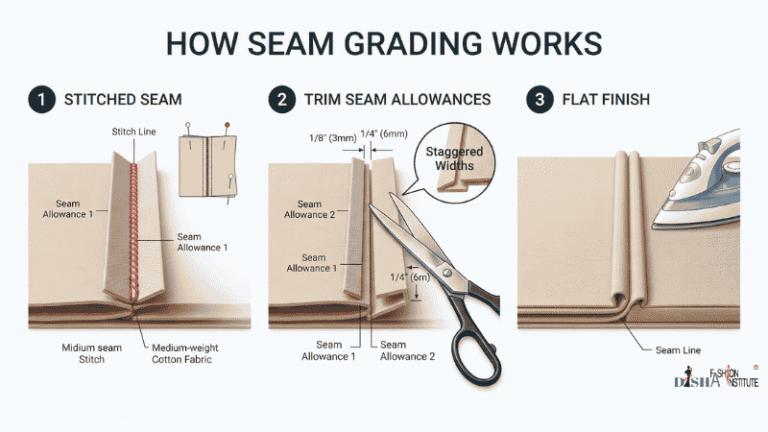
Seam grading is generally performed after the seam has been stitched. The seam allowances are trimmed carefully to different widths, allowing the layers to sit more smoothly.
The basic process involves:
- Stitch the seam: Join the fabric pieces using the required seam allowance.
- Identify the seam layers: Check how many layers of fabric are present and determine where bulk needs to be reduced.
- Trim the seam allowances: Carefully trim the layers to different widths rather than leaving them all equally wide.
- Finish the seam: Press the seam as required by the garment and fabric.
The amount trimmed depends on the fabric thickness, seam construction, and garment design. Avoid cutting too close to the stitching line, as this can weaken the seam or cause it to open.
Where Is Seam Grading Used?
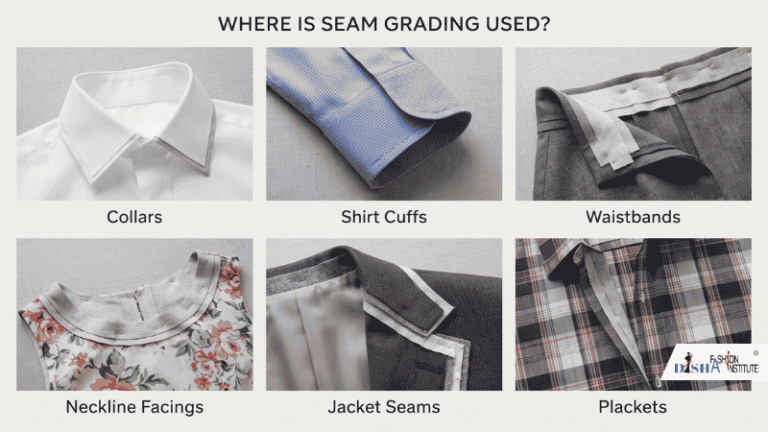
Seam grading is commonly used in garment construction wherever multiple layers of fabric may create unwanted thickness.
Typical applications include:
- Collars and collar stands
- Shirt cuffs and plackets
- Waistbands
- Facings and necklines
- Jacket and coat seams
- Thick or layered garment seams
- Tailored garments that require a smooth finish
For example, grading the seam allowances around a collar can reduce bulk and help the collar turn more neatly. In jackets and coats, it can make layered seams less bulky and improve the final appearance.
What Are the Benefits of Seam Grading?
Reduces Bulk
Trimming seam allowances to different widths reduces the thickness created by overlapping fabric layers.
Creates a Flatter Finish
Graded seams can lie flatter, helping collars, cuffs, facings, and other garment details maintain their intended shape.
Improves Garment Appearance
Reducing unnecessary bulk can make the finished garment look neater and more professional.
Helps with Layered Construction
Seam grading is especially useful in areas where several layers of fabric are stitched together.
Seam Grading vs Pattern Grading
Although the terms sound similar, seam grading and pattern grading refer to two different processes.
Seam grading reduces the bulk of stitched seam allowances by trimming them to different widths.
Pattern grading changes the dimensions of a sewing pattern to create different garment sizes, such as small, medium, and large.
Understanding this difference is important for fashion design students because both techniques are used in garment production but serve different purposes.
For delicate or lightweight fabrics, the stitch size and thread tension should be adjusted carefully. Taking very small bites of the fabric can help reduce visible marks on the outside.
For heavier fabrics, slightly stronger and more closely spaced stitches may be appropriate.
Common Seam Grading Mistakes
Beginners may make a few mistakes when learning seam grading.
- Cutting too close to the stitching: This can weaken the seam or cause it to unravel.
- Trimming every layer equally: This may leave unnecessary bulk instead of distributing the layers more effectively.
- Using unsuitable scissors: Blunt or inaccurate scissors can damage the fabric.
- Skipping pressing: Pressing helps the graded seam settle into its intended shape.
- Ignoring fabric thickness: Different fabrics require different amounts of trimming.
Always trim carefully, use sharp fabric scissors, and test the technique on a sample if you are unfamiliar with the fabric.
Why Should Beginners Learn Seam Grading?
Learning seam grading helps beginners understand how small construction details affect the quality of a finished garment. Even when the stitching is accurate, bulky seam allowances can make collars, cuffs, facings, and other details look uneven.
Practicing seam grading on simple sewing samples can help you develop better fabric-handling skills and improve your finishing techniques.
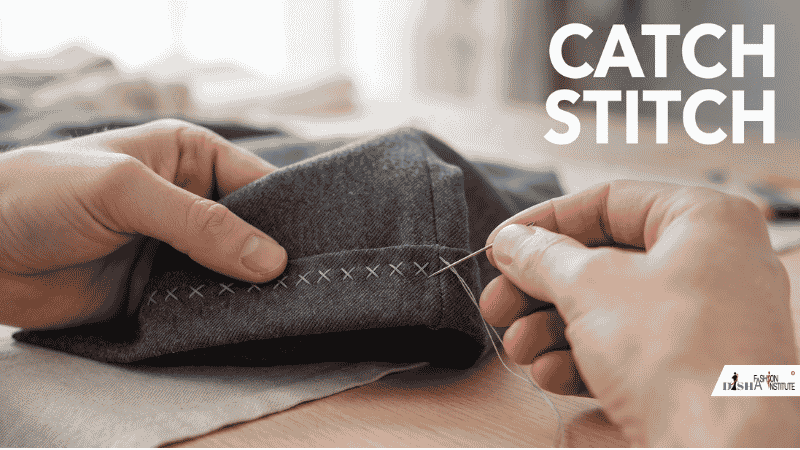
In whip stitch, the thread passes diagonally over the edge of the fabric, creating stitches that wrap around the edge. In catch stitch, the needle moves between the hem and the garment fabric, producing small crossed or X-like stitches.
Whip stitch is often useful for joining or securing edges, while catch stitch is particularly useful for securing folded hems.
Conclusion
Seam grading is an important garment-construction technique used to reduce bulk in seam allowances and create flatter, neater finishes. It is especially helpful around collars, cuffs, facings, waistbands, and other areas where fabric layers overlap.
For anyone learning tailoring or fashion designing, understanding seam grading is a valuable step toward producing well-finished garments with a more professional appearance.
Join Disha Fashion Institute
You can also visit our Homepage or explore our different Course pages to learn more about our programs. If you need any guidance related to courses like Basic Tailoring, Diploma in Tailoring, Fashion Designing, or other fashion-related courses, feel free to contact us. Our team will understand your requirements, skill level, and career goals to guide you toward the most suitable course that matches your learning needs. you can check our YouTube Channel we post our Institute and tutorial over there.